
Transforming your home through renovation requires more than just a vision and a budget. The success of your project hinges on finding the right house renovation contractor who can bring your ideas to life while maintaining quality standards, staying on schedule, and respecting your investment. Whether you’re planning a complete home overhaul or focusing on specific areas like kitchen and bathroom upgrades, the contractor you choose will determine the outcome of your renovation journey. This guide walks you through the essential factors to consider, questions to ask, and red flags to avoid when selecting a professional who will handle one of your most significant investments.
Understanding the Role of a House Renovation Contractor
A house renovation contractor serves as the project manager, coordinator, and quality control specialist for your home improvement endeavor. They orchestrate multiple trades, source materials, obtain necessary permits, and ensure work complies with local building codes and safety regulations.
The contractor’s responsibilities typically include:
- Developing detailed project timelines and budgets
- Hiring and supervising subcontractors for specialized tasks
- Ordering materials and ensuring timely delivery
- Managing daily site operations and problem-solving
- Communicating progress updates and addressing concerns
Beyond these operational duties, an experienced contractor brings valuable expertise to the planning phase. They can identify potential structural issues, suggest cost-effective alternatives, and help you avoid common renovation pitfalls that might not be apparent to homeowners.

Licensing and Insurance Requirements
Before engaging any house renovation contractor, verify their legal credentials. Every state maintains different licensing requirements for general contractors, and working with an unlicensed professional can leave you vulnerable to liability and substandard work.
Request proof of the following documentation:
- General contractor’s license with current expiration date
- Liability insurance covering property damage and accidents
- Workers’ compensation insurance protecting laborers on your property
- Bond certification ensuring financial recourse if the contractor fails to complete work
The EPA’s guidelines for contractors also require certification for working on homes built before 1978 due to potential lead paint exposure. This certification demonstrates a contractor’s commitment to safety standards and regulatory compliance.
Evaluating Contractor Qualifications and Experience
Not all contractors possess equal expertise across renovation types. A professional who excels at whole-home remodels might lack specific experience with sustainable bathroom installations or smart home technology integration.
Assessing Relevant Experience
Review the contractor’s portfolio focusing on projects similar to yours in scope, style, and budget. A contractor specializing in historic home restoration brings different skills than one focused on modern, eco-friendly upgrades.
| Evaluation Criteria | What to Look For | Red Flags |
|---|---|---|
| Years in Business | 5+ years of continuous operation | Frequent business name changes |
| Project Portfolio | Similar projects with before/after photos | Only generic stock images |
| Trade Specialization | Expertise in your specific renovation type | Claims to do everything equally well |
| Local Knowledge | Familiarity with local building codes | Works exclusively in distant areas |
Checking References and Past Work
Contact at least three recent clients whose projects resemble yours. According to essential qualities to look for in renovation contractors, speaking with past clients reveals insights about communication style, problem-solving abilities, and follow-through on commitments.
Questions to ask references:
- Did the project stay within the original budget and timeline?
- How did the contractor handle unexpected issues?
- Was the job site kept clean and organized?
- Would you hire this contractor again?
- Were there any warranty issues after completion?
Visit completed projects if possible. This firsthand observation reveals workmanship quality that photographs might not capture, particularly in details like tile alignment, paint finish, and fixture installation.
The Bidding and Estimation Process
Obtaining multiple bids helps you understand fair market pricing while evaluating how different contractors approach your project. However, comparing estimates requires more nuance than simply choosing the lowest price.
Understanding Bid Components
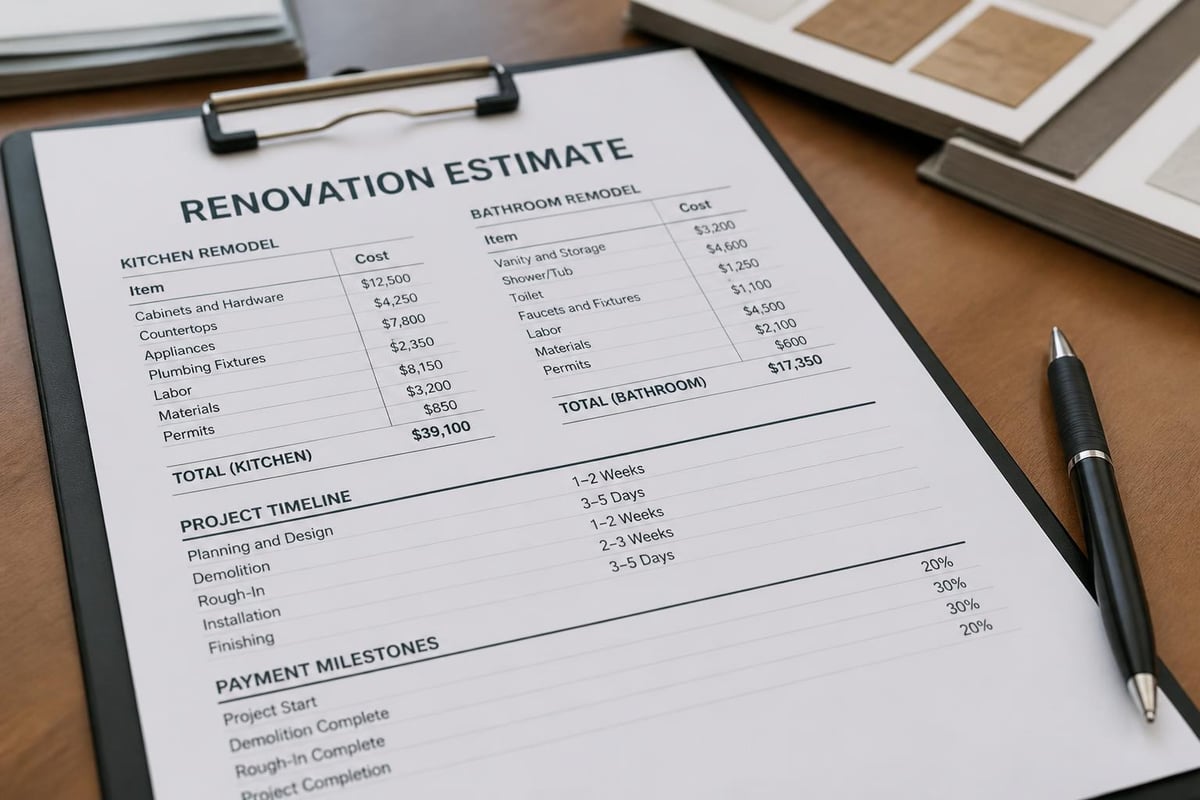
A comprehensive estimate from a qualified house renovation contractor should itemize costs across multiple categories. Transparency in pricing indicates professionalism and helps prevent surprise expenses later.
Request bids that specify:
- Labor costs broken down by trade and phase
- Material costs with specific product brands and grades
- Permit and inspection fees
- Contingency allowance for unforeseen issues
- Payment schedule tied to project milestones
- Project timeline with start and completion dates
Comparing Proposals Effectively
Price differences among bids often reflect variations in material quality, labor expertise, or project scope interpretation. A significantly lower bid might indicate the contractor misunderstood requirements, plans to use inferior materials, or lacks proper insurance coverage.
When evaluating competing proposals, consider these factors beyond price:
- Communication clarity: Does the contractor explain their approach thoroughly?
- Problem anticipation: Do they identify potential challenges proactively?
- Value engineering: Can they suggest cost-saving alternatives without sacrificing quality?
- Warranty coverage: What guarantees do they offer on workmanship and materials?
Critical Questions Before Signing a Contract
The essential questions to ask before renovation include inquiries about the contractor’s process, communication protocols, and contingency planning. These conversations establish expectations and reveal how the contractor handles client relationships.
Project Management and Communication
Understand how your house renovation contractor will keep you informed throughout the project. Establish preferred communication methods, update frequency, and decision-making protocols from the outset.
Key discussion points include:
- Who serves as your primary contact for daily questions?
- How often will you receive progress updates?
- What decisions require your approval before proceeding?
- How are change orders documented and priced?
- What happens if you’re unsatisfied with completed work?
Timeline and Scheduling
Realistic scheduling accounts for material lead times, inspection delays, and weather interruptions. A contractor who promises unrealistically fast completion might be overcommitting or cutting corners.
Discuss these timeline elements:
- Projected start date and factors that might delay it
- Phase completion milestones for tracking progress
- Working hours and days when crews will be on-site
- Inspection timing and how delays are handled
- Substantial completion date versus final walkthrough
Avoiding Common Contractor Selection Mistakes
Many homeowners focus exclusively on cost while overlooking factors that ultimately determine project success. The habits recommended for 2026 renovations emphasize strategic planning and thorough contractor vetting over rushing to start work.
Red Flags to Recognize
Certain warning signs indicate a contractor might not deliver satisfactory results. Trust your instincts if something feels concerning during initial conversations.
Watch for these problematic indicators:
- Requests for full payment upfront or unusually large deposits
- Reluctance to provide references or proof of insurance
- Pressure to sign contracts immediately without review time
- Vague or verbal-only estimates without written documentation
- No permanent business address or professional credentials
- Poor communication or difficulty scheduling meetings
The Importance of Written Contracts
Never proceed with renovation work based on verbal agreements or handshake deals. A comprehensive written contract protects both parties and provides recourse if disputes arise. The guide to choosing renovation contractors stresses that detailed contracts prevent misunderstandings and establish clear accountability.
Essential contract elements include:
| Contract Component | Purpose | Details to Include |
|---|---|---|
| Scope of Work | Defines project boundaries | Specific tasks, materials, finishes |
| Payment Terms | Establishes financial obligations | Amount, schedule, acceptable payment methods |
| Timeline | Sets completion expectations | Start date, milestones, final completion |
| Change Order Process | Manages scope modifications | How changes are requested, approved, priced |
| Warranty Information | Covers post-completion issues | Duration, coverage, claim process |
| Termination Clause | Protects both parties | Conditions for ending contract early |
Specialized Considerations for Modern Renovations
Contemporary home improvements increasingly incorporate sustainable materials, smart home technology, and energy-efficient systems. Your house renovation contractor should demonstrate knowledge of these evolving trends, particularly if your project includes eco-friendly bathrooms, smart accessories, or sustainable building practices.
Sustainable and Smart Home Integration
When planning renovations that include smart home technologies or sustainable solutions, verify that your contractor has experience with these specialized installations. Green building certifications or training in smart system integration indicates commitment to staying current with industry innovations.
Discuss these modern renovation aspects:
- Energy-efficient appliance installation and proper electrical requirements
- Water conservation fixtures and plumbing modifications
- Smart home device integration and network infrastructure
- Sustainable material sourcing and waste reduction practices
- Indoor air quality improvements through ventilation and material selection
Planning for Often-Overlooked Elements
The elements frequently regretted when skipped during renovation include infrastructure upgrades like electrical panel updates, proper insulation, and thoughtful lighting design. An experienced contractor will recommend addressing these foundational improvements even if they weren’t in your original plan.
Don’t overlook these critical upgrades:
- Electrical system capacity for modern appliance loads
- Plumbing valve replacements and water line updates
- Insulation improvements in walls and attics
- Ventilation system enhancements for moisture control
- Structural reinforcements revealed during demolition

Managing the Contractor Relationship
Once you’ve selected your house renovation contractor and signed the contract, maintaining a productive working relationship ensures project success. Clear boundaries, regular communication, and mutual respect create an environment where problems get solved efficiently.
Effective Communication Strategies
Establish a communication rhythm that works for both parties. Daily check-ins might be excessive, but weekly updates help you stay informed without micromanaging. Use your contractor’s preferred method whether that’s phone calls, text messages, or email.
Best practices for contractor communication:
- Document everything in writing, especially change requests and approvals
- Ask questions promptly when you don’t understand something
- Provide timely decisions on selections and approvals
- Respect working hours and avoid constant interruptions
- Address concerns immediately before they escalate into conflicts
Handling Changes and Unexpected Issues
Renovation projects rarely proceed exactly as planned. Hidden water damage, outdated electrical systems, or structural surprises often emerge during demolition. How your contractor handles these discoveries reveals their professionalism and expertise.
When changes become necessary:
- Request written change orders detailing additional costs and timeline impacts
- Understand why the change is needed and explore alternatives
- Get explanations for pricing on unexpected work
- Update your budget tracking to account for modifications
- Document approval of changes before work proceeds
Payment Best Practices
The payment structure protects both homeowner and contractor when structured appropriately. Never pay the entire contract amount upfront, and tie payments to completed work milestones rather than calendar dates.
Typical Payment Schedules
Most renovation contracts follow a milestone-based payment approach. This structure ensures the contractor has working capital while protecting you from paying for incomplete work.
Common payment milestone structure:
- 10-20% deposit upon contract signing
- 25-30% after demolition and rough-in work
- 25-30% at midpoint with major installations complete
- 25-30% upon substantial completion
- 10% final payment after walkthrough and punch list completion
Protecting Your Investment
Keep detailed records of all payments, change orders, and project documentation. Many homeowners establish a dedicated project folder with contracts, receipts, warranty information, and communication records.
Consider these financial protection strategies:
- Pay by check or credit card for paper trail documentation
- Never pay cash for renovation work
- Verify lien waivers from subcontractors before final payment
- Hold final payment until punch list items are complete
- Retain warranty information for materials and workmanship
Evaluating Contractor Performance
As your project progresses, assess whether your house renovation contractor is meeting expectations. Regular evaluation helps you address issues early rather than discovering problems after completion.
Quality Control Checkpoints
Schedule informal walkthroughs at major project milestones. These inspections let you see work progress, ask questions, and verify that execution matches your expectations and the contract specifications.
| Project Phase | What to Inspect | Questions to Ask |
|---|---|---|
| Demolition | Proper disposal, protection of uninvolved areas | Are we staying on schedule? Any surprises? |
| Rough-In | Electrical, plumbing, HVAC placement | Does everything meet code? Are inspections scheduled? |
| Drywall | Wall repair, texture, preparation | When do finish selections need to be finalized? |
| Finish Work | Fixtures, flooring, painting, trim | What remains before substantial completion? |
Addressing Performance Concerns
If work quality or progress falls short of expectations, address concerns directly with your contractor rather than letting frustration build. Most professionals appreciate feedback and opportunity to correct issues.
When raising concerns:
- Focus on specific issues with reference to contract terms
- Provide photos documenting problems when helpful
- Listen to the contractor’s perspective and proposed solutions
- Set clear expectations for correction timeline
- Follow up in writing to confirm agreed-upon resolutions
Preparing for Project Completion
As renovation work nears completion, shift focus toward final inspections, punch list items, and long-term maintenance planning. Your contractor should facilitate final building inspections and provide documentation for future reference.
The Final Walkthrough
Schedule a comprehensive walkthrough before making final payment. This inspection identifies any incomplete or unsatisfactory work that requires attention before the contractor demobilizes.
Create a punch list addressing:
- Touch-up painting or staining needs
- Hardware adjustments or replacements
- Caulking or grouting improvements
- Cleaning requirements
- Any work that doesn’t match specifications
Warranty and Maintenance Information
Collect all warranty documentation for materials, appliances, and workmanship. Your house renovation contractor should provide a warranty on their labor separate from manufacturer warranties on products.
Essential documentation to obtain:
- Workmanship warranty with duration and coverage details
- Product warranties for appliances, fixtures, and materials
- Maintenance recommendations for new installations
- Paint colors and material specifications for future reference
- Subcontractor contact information for specialty systems
- Final inspection certificates and permit closeout documentation
Selecting the right house renovation contractor requires thorough research, careful evaluation, and clear communication about expectations and project details. By verifying credentials, comparing detailed proposals, asking critical questions, and maintaining professional working relationships throughout your project, you set the foundation for successful home transformation that enhances both function and value. Whether you’re planning comprehensive remodeling or focused improvements to kitchens, bathrooms, or living spaces, Homzent offers expert guidance and quality solutions to help you achieve your renovation goals with confidence in both the process and the results.