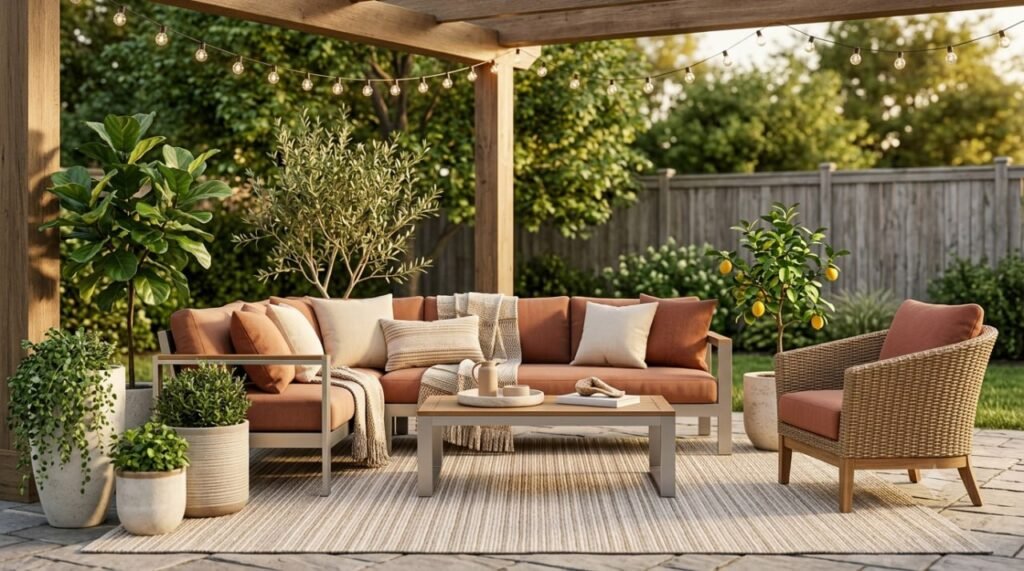
Most outdoor decor guides show you a beautifully styled patio without ever mentioning that half of what’s pictured probably faded, rusted, or fell apart within a season. That’s the gap this guide is trying to close, ideas that look good and are actually built to handle rain, sun, and humidity.
Outdoor decor lives a harder life than anything indoors. It gets rained on, baked in direct sun, and left out through humidity swings that would ruin most indoor furniture and fabric within weeks. Choosing decor without factoring that in is one of the most common (and expensive) outdoor decorating mistakes.
At Homzent, we think good outdoor decor is really two decisions layered together: what looks good, and what’s actually made to survive being outside. This guide covers both, from materials that hold up in real weather to styling ideas for patios, porches, balconies, and everything in between.
Know Your Space Before You Shop
Outdoor decor ideas need to be filtered through the specific space you’re working with, since a strategy that works for a backyard patio won’t necessarily fit a small apartment balcony.
- Patios and decks typically have the most square footage to work with, allowing for full seating arrangements, rugs, and larger planters.
- Porches usually benefit from a more curated, front-facing approach, since they’re part of your home’s curb appeal as much as your personal outdoor space.
- Balconies need compact, often railing-mounted or foldable solutions that maximize a small footprint.
- Backyards offer the most flexibility, but also the most exposure to sun, wind, and rain across the full space, so material choice matters even more.
Materials That Actually Survive Outside
This is the part most outdoor decor lists skip entirely, and it’s the difference between decor that lasts for years and decor you’re replacing every summer.
For metal furniture, aluminum outperforms steel. Aluminum forms a natural oxide layer that resists rust and corrosion without any extra coating, while steel is prone to rust once its finish wears down. It’s also lighter, which makes it easier to move and store.
For wood, look for teak or eucalyptus. These woods contain natural oils that resist rot and moisture far better than untreated softwoods, making them a dependable choice for furniture left outside long-term.
For woven furniture, choose resin wicker over natural wicker. Natural wicker breaks down quickly outdoors, while synthetic resin wicker is built specifically to handle sun and rain without cracking or fading.
For fabric, look specifically for performance or solution-dyed outdoor fabric. Brands like Sunbrella are designed to resist fading and moisture in a way that regular indoor fabric, or even canvas treated with a water-repellent spray, simply can’t match long-term.
A simple rule to shop by: if a product doesn’t explicitly say it’s designed for outdoor or all-weather use, assume it isn’t, regardless of how it looks in a photo.
Planters and Greenery Ideas
Plants are one of the fastest ways to add life to an outdoor space, and one of the more forgiving decor choices in terms of budget.
- Mix pot sizes and heights. Grouping a few different planter heights together creates more visual interest than a single row of matching pots.
- Choose weather-appropriate pot materials. Fiberglass and glazed ceramic hold up well outdoors, while unglazed terracotta can crack in freezing climates if it retains water.
- Add a vertical garden for small spaces. Wall-mounted planters or a tiered plant stand make use of vertical space when floor room is limited, especially on balconies.
- Choose plants suited to your actual sun exposure. A beautiful plant that isn’t suited to your patio’s light levels will struggle regardless of how nice the planter is.
Outdoor Rugs and Textiles
An outdoor rug does more for a space than almost any other single item, anchoring a seating area the same way an indoor rug does in a living room.
- Choose polypropylene or specifically labeled outdoor rugs. These materials resist moisture and mildew, unlike indoor rugs that will mold quickly if left outside.
- Use a rug to define a seating zone. Especially on a large patio or deck, a rug helps visually separate a lounge area from the rest of the space.
- Layer in outdoor throw pillows in performance fabric. These add color and comfort without the risk of fading or holding moisture that indoor pillows would.
- Store cushions when not in use if they’re not fully weatherproof. Even performance fabrics last longer with occasional protection from prolonged, direct exposure.
Outdoor Lighting Ideas
Lighting extends how long you can actually use an outdoor space each day, and it’s one of the most transformative additions after dark.
- String lights add instant ambiance. Draped along a fence, pergola, or porch beam, they create a warm, inviting glow with minimal installation effort.
- Solar lanterns and pathway lights add function without wiring. These are especially useful for backyards or gardens without easy access to outdoor outlets.
- A small water feature adds both sound and light reflection. Even a compact solar-powered fountain or bubbling pot can make a space feel noticeably more elevated.
- Layer lighting like you would indoors. A single overhead source (like a porch light) rarely creates the same warmth as string lights, lanterns, and candles used together.
Wall Decor and Focal Points Outdoors
Bare exterior walls, whether on a porch, patio, or garden fence, are one of the most overlooked outdoor decorating opportunities.
- Choose weather-resistant wall sculptures or clocks. Metal, resin, or treated wood pieces designed specifically for exterior use hold up far better than indoor decor repurposed outside.
- Add a mirror rated for outdoor use. A garden mirror can visually expand a small patio or courtyard, but only outdoor-rated versions resist fogging and moisture damage.
- Use a statement front door or entry piece. For porches specifically, this is often the single highest-impact decor decision, since it sets the tone before anyone even reaches the door.
- Rotate seasonal wall decor. Wreaths, seasonal art, or string light arrangements are an easy way to keep an outdoor focal point feeling current throughout the year.
Small Space and Balcony Decor Ideas
Compact outdoor spaces need decor that works harder per square foot than a full backyard would require.
- Choose foldable or stackable furniture. This allows a small balcony to shift between a styled lounge space and open floor space as needed.
- Use a railing planter instead of floor pots. This frees up floor space entirely while still adding greenery at eye level.
- Add a single outdoor runner instead of a full rug. A narrow runner adds color and texture without overwhelming a tight footprint.
- Keep the color palette tight. Two or three coordinating colors across cushions, planters, and accessories make a small space feel curated rather than cluttered.
Budget Outdoor Decor vs. Investment Outdoor Decor
| Factor | Budget Decor | Investment Decor |
| Materials | Basic resin, canvas with water-repellent spray | Aluminum, teak, resin wicker, Sunbrella fabric |
| Average Cost | Low—often under $200 for a full seating refresh | High—can run into the thousands for full furniture sets |
| Durability | May need replacing within a season or two | Built to last multiple years with proper care |
| Best For | Renters, seasonal spaces, first-time outdoor setups | Long-term homeowners, permanent outdoor living spaces |
| Maintenance | Requires more frequent storage or covering | More forgiving of being left outside year-round |
At Homzent, we usually suggest spending more on the furniture pieces and fabric that stay outside the longest, and saving on smaller, easily swapped items like planters, string lights, and seasonal accents.
Common Outdoor Decor Mistakes to Avoid
Using indoor furniture or decor outside. Materials not designed for outdoor use will fade, warp, or grow mold far faster than expected, even in mild climates.
Choosing natural wicker or untreated wood for permanent outdoor use. These materials look similar to their weatherproof counterparts but break down significantly faster when left exposed.
Skipping a rug because “it’s just outside.” An outdoor space without a rug or defined seating zone often feels unfinished compared to one with a clear anchor point.
Overcrowding a small balcony or porch. In compact spaces, one well-chosen furniture piece and a few plants usually look more intentional than trying to fit in every idea at once.
Ignoring your climate. A decor plan built for a dry, mild climate may fail quickly in a humid or freezing one; always match material choices to your actual weather conditions.
Frequently Asked Questions
What is the best material for outdoor furniture?
Aluminum is one of the most weather-resistant metal options since it naturally resists rust, while teak and eucalyptus are the most dependable woods, and resin wicker holds up far better than natural wicker.
Can I use indoor furniture outside?
It’s not recommended for long-term use, since indoor materials aren’t designed to handle rain, humidity, and direct sun, and will typically fade, warp, or develop mold much faster than outdoor-rated pieces.
What fabric is best for outdoor cushions and pillows?
Performance or solution-dyed fabrics, such as Sunbrella, are specifically designed to resist fading and moisture damage, making them a better long-term choice than regular indoor fabric or even treated canvas.
How do I decorate a small balcony?
Foldable or stackable furniture, railing-mounted planters, a narrow outdoor runner, and a tight two-to-three color palette all help a small balcony feel styled without overwhelming the limited space.
Are outdoor rugs necessary for patio decor?
While not required, an outdoor rug helps visually define a seating area and adds warmth and color, similar to how a rug functions in an indoor living room.
What outdoor decor ideas work well for curb appeal?
A statement front door, coordinated planters, weather-resistant wall decor, and warm porch lighting are among the most effective ways to improve curb appeal without a full exterior renovation.
Is aluminum or steel better for outdoor furniture?
Aluminum is generally the better choice, since it naturally resists rust and corrosion, while steel is more prone to rusting once its protective coating wears down over time.
How do I know if a piece of decor is actually weatherproof?
Look for explicit labeling like “outdoor-rated,” “all-weather,” or a specific material callout such as powder-coated aluminum, teak, or Sunbrella fabric; if a product listing doesn’t mention outdoor use at all, it’s safest to assume it isn’t built for it.
Do I need to store outdoor furniture in winter?
It depends on the material and your climate. Aluminum, teak, and resin wicker can generally stay outside year-round with occasional cleaning, while cushions and fabric pieces last longer if stored or covered during extended periods of snow, freezing rain, or intense sun.
Final Thoughts
Good outdoor decor isn’t just about what looks nice in a photo, it’s about choosing pieces that can actually handle the space they’re going into, season after season. Once material choice is settled, the styling part, planters, lighting, textiles, becomes the easy and genuinely fun part of the process.
Start with the furniture and fabric that will stay outside the longest, get those material choices right, and let the smaller, more affordable decor layer in around them. That’s the kind of practical thinking we try to build into every guide at Homzent.