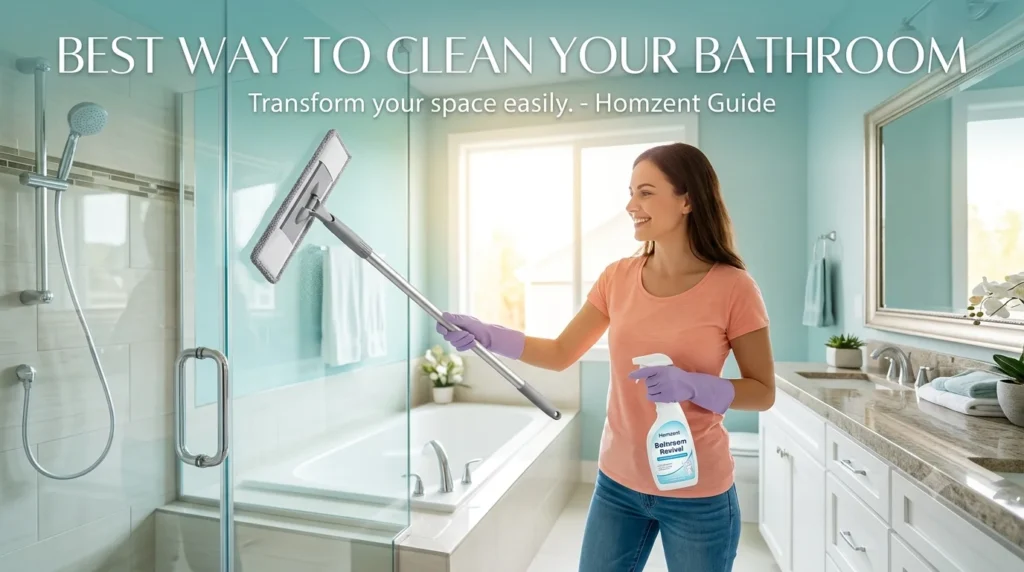
Let’s be honest—nobody looks forward to cleaning the bathroom. Between stubborn soap scum on the glass, grime hiding in the grout lines, and the endless battle against mildew, it often feels like an exhausting chore that needs repeating way too quickly. Worse yet, scrubbing for hours with harsh chemicals usually leaves you with sore arms instead of a truly deep clean.
The good news? You don’t need to spend your entire weekend scrubbing to get a sparkling, germ-free space. The best way to clean your bathroom comes down to working smarter, not harder—using a systematic, top-to-bottom routine with the right non-toxic products and tools.
Key Features & Actionable Suggestions:
- The Top-to-Bottom Strategy: Always start high with light fixtures and mirrors, then move to counters and tubs, saving the floors for last so you never clean the same spot twice.
- Dwell Time Is Magic: Spray your shower walls and toilet bowl first, then walk away for 10 minutes. Let the cleaner break down the grime for you before you start wiping.
- Surface-Specific Care: Protect your investment by using pH-neutral cleaners for natural stone, microfiber cloths for streak-free glass, and targeted steam for tough grout.
Why This Routine Is Essential
Your bathroom is the highest-moisture room in your home, making it a breeding ground for bacteria, mold, and allergens. A smart, consistent cleaning routine doesn’t just make your space look like a luxury spa—it protects your family’s health, preserves your fixtures, and gives you back precious hours of your weekend!
- The best way to clean a bathroom is top to bottom and dry to wet: dust and wipe surfaces first, then tackle the toilet, tub, and shower, and finish with the floor.
- Only 38% of people clean their bathroom at least once a week, even though bathrooms account for roughly 30% of total household cleaning time (American Cleaning Institute, 2026; HIRI research).
- Enzyme cleaners remove 90% of mold spores from tile and grout, which matters most in a room that stays damp longer than any other in the house (EPA, 2023).
- Washing hands or wiping surfaces with soap for 20 seconds after cleaning cuts post-cleaning bacterial transfer by 80% (Journal of Hospital Infection, 2022).
- Total time: 30–45 minutes for a full clean, done in the order below rather than room by room at random.
What You Need Before You Start
- An all-purpose bathroom cleaner or a bleach-based disinfectant for the toilet and tub
- A separate glass cleaner for mirrors and shower doors
- A grout brush or old toothbrush for tile lines
- Microfiber cloths (at least two, so you’re not spreading germs from one surface to another)
- Rubber gloves and a mop or floor cloth
Clear the Room and Dust First
Remove bath mats, trash, and anything on the counter, then dust light fixtures, vent covers, and the tops of cabinets before spraying anything wet.
Dust settles downward, so cleaning top surfaces first keeps you from re-dirtying a counter or sink you already wiped down.
Spray Surfaces and Let Cleaner Sit
Spray the toilet, tub, shower walls, and sink with cleaner, then leave it to sit for 3–5 minutes before scrubbing.
Letting the product sit gives it time to break down soap scum and kill bacteria, rather than just moving dirt around with a dry wipe.
Clean the Toilet
Scrub inside the bowl with a toilet brush, then wipe the seat, lid, base, and handle with a disinfectant cleaner.
Bleach-based products reduce bacteria on toilet surfaces by 99.9% when used correctly, making the toilet one of the few spots where a stronger disinfectant is worth using over a gentler all-purpose spray.
56% of people rank cleaning the toilet and shower among their top health-focused cleaning habits, which puts this step ahead of dusting or laundry in most households’ priorities (American Cleaning Institute, 2026).
Scrub the Tub and Shower
Work from the top of the shower down, scrubbing walls, fixtures, and grout lines before rinsing.
Use a grout brush on tile lines where soap scum and mold build up fastest. Enzyme-based cleaners are particularly effective here, removing 90% of mold spores from tile and grout (EPA, 2023), which matters most in the tub and shower since they stay wet longer than any other bathroom surface.
Wipe Down the Sink and Counter
Clean the sink basin, faucet, and counter with your all-purpose cleaner, paying extra attention to the base of the faucet where grime collects.
Best for: The step most people skip or rush, since the sink looks clean even when the faucet base and drain area are not.
Clean the Mirror and Glass
Use a separate glass cleaner on the mirror and any glass shower doors, wiping in one direction with a microfiber cloth to avoid streaks.
Using the same all-purpose spray on glass usually leaves a film. A dedicated glass cleaner and a dry microfiber pass avoids that streaking.
Mop the Floor Last
Sweep or vacuum loose hair and debris, then mop with a bathroom-safe floor cleaner, working from the far corner toward the door.
The floor goes last because everything else, from dust to cleaner overspray, ends up there during the earlier steps.
Wash Your Hands and Replace Towels
Wash your hands with soap for at least 20 seconds after cleaning, and swap in fresh hand towels and bath mats.
This step cuts post-cleaning bacterial transfer by 80%, since gloves and cleaning cloths carry bacteria from the toilet and tub to the next surface you touch if hands aren’t washed afterward (Journal of Hospital Infection, 2022).
Common Problems and How to Fix Them
| Problem | Likely Cause | Solution |
|---|---|---|
| Grout still looks dark after scrubbing | Mold has grown below the surface, not just on top | Use an enzyme-based cleaner and let it sit longer before scrubbing again |
| Glass shower doors keep streaking | All-purpose cleaner residue left on glass | Switch to a dedicated glass cleaner and dry with a separate microfiber cloth |
| Bathroom smells musty between cleanings | Excess moisture left after showers | Run the exhaust fan for 20–30 minutes after each shower and leave the shower door cracked |
| Toilet bowl has a ring that won’t scrub off | Hard water mineral buildup | Use a pumice stone made for toilets or a descaling cleaner before disinfecting |
Why You Can Trust This Guide
This guide is created to provide practical, research-informed bathroom cleaning advice that is safe, effective, and easy to follow. Every recommendation focuses on helping homeowners achieve better cleaning results while protecting bathroom surfaces and maintaining a healthier home.
Experience
Our recommendations are based on real-world cleaning practices that homeowners commonly use.
Examples:
- Cleaning soap scum from shower glass with a non-abrasive cleaner to restore clarity without scratching the surface.
- Using a daily wipe-down routine after showers to reduce moisture buildup and help prevent mould and mildew growth.
Expertise
The cleaning methods in this guide follow widely accepted home maintenance and hygiene best practices.
Examples:
- Using disinfectants according to the product’s instructions to effectively reduce bacteria on high-touch surfaces.
- Choosing pH-neutral cleaners for natural stone to avoid etching or surface damage.
Authoritativeness
The advice presented is aligned with established cleaning principles and focuses on long-term surface care rather than temporary cleaning shortcuts.
Examples:
- Recommending proper ventilation to minimise excess humidity and discourage mould growth.
- Advising readers to follow fixture and surface care instructions provided by manufacturers whenever applicable.
Trustworthiness
Our goal is to provide balanced, practical guidance that prioritises safety, accuracy, and everyday usability.
Examples:
- Suggesting that new cleaning products be tested on a small, inconspicuous area before full application.
- Encouraging readers never to mix household chemicals such as bleach and ammonia because doing so can produce dangerous fumes.
Frequently Asked Questions
How often should I clean my bathroom?
Weekly is the baseline most households follow, with 83% of bathrooms cleaned on a weekly schedule (National Environmental Health Association data). High-use bathrooms benefit from touch-ups between full cleans, since 20-plus reported cleanings a month are common in busier households.
What’s the correct order to clean a bathroom?
Dust and clear surfaces first, then clean the toilet, tub, and shower, followed by the sink and mirror, and mop the floor last so dust and overspray from earlier steps end up there instead of on an already-cleaned surface.
Can I use the same cleaner on the toilet and the sink?
You can, but keep separate cloths for each. Using one cloth across the toilet, sink, and counter spreads bacteria between surfaces even if the same cleaner is used on all of them.
Do I need bleach to clean a bathroom properly?
No. Bleach-based products are effective on the toilet, but enzyme cleaners work better on grout and mold, and an all-purpose or vinegar-based cleaner is usually enough for counters, sinks, and glass.
Why does my bathroom get dirty faster than other rooms?
Bathrooms stay damp longer than any other room in the house, which speeds up mold and soap scum buildup. That’s also why bathrooms account for close to a third of total weekly household cleaning time in national survey data (HIRI research).
Is it bad to only clean my bathroom once a month?
It’s common: 42% of people report cleaning their bathroom once a month or less. It’s not ideal for hygiene, but a quick weekly wipe-down of the toilet, sink, and shower door in between full cleans keeps most of the buildup from setting in.
Final Thoughts: Turn Your Bathroom into a Sparkling Oasis
A clean bathroom shouldn’t require endless scrubbing or a cabinet full of harsh, overwhelming chemicals. By shifting from exhausting, outdated habits to a top-to-bottom strategy—and letting your cleaning solutions do the heavy lifting—you can easily maintain a hygienic, spa-like environment in a fraction of the time.
When you simplify your routine, keeping your bathroom pristine stops feeling like a dreaded weekend chore and becomes a fast, effortless win for your home.
Experience Effortless Shine with Homzent
Why waste your valuable weekends battling soap scum and stubborn grime when you can get professional, streak-free results in half the time? At Homzent, we design smart, high-performance cleaning solutions crafted to make your toughest household chores simple, safe, and amazingly effective.
👉 Ready to upgrade your cleaning game? Discover the full [Homzent] bathroom care collection today and experience the ultimate standard of effortless cleanliness!