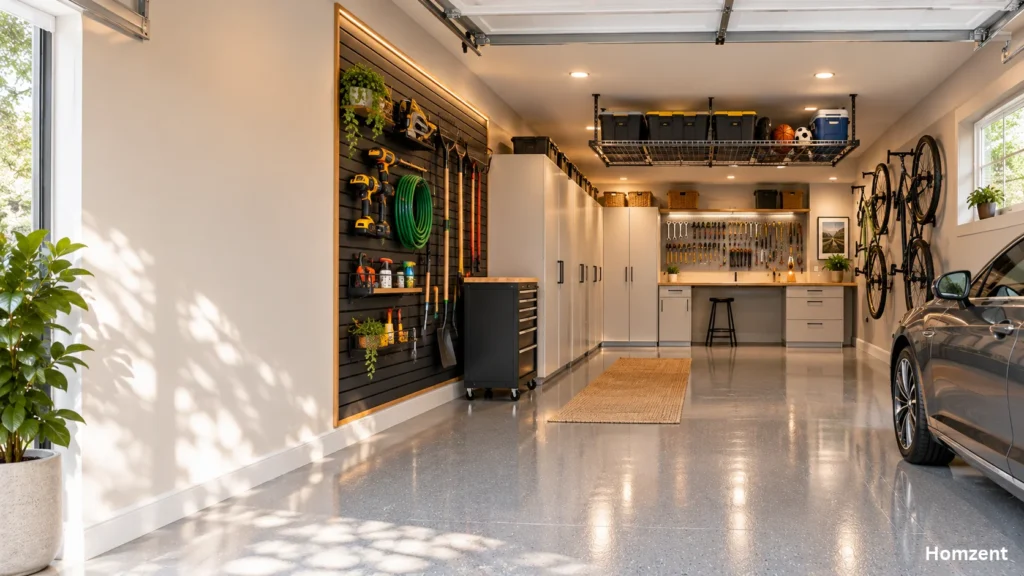
Is your garage functioning as a secure home for your vehicle and workshop—or has it devolved into a chaotic dumping ground for mystery bins, sports equipment, and tangled lawn care gear?
In 2026, garage design has fundamentally shifted from stacked, random floor bins to smart, wall-focused modular systems. Homeowners are reclaiming up to 35% more floor space by utilizing vertical height, heavy-duty overhead grids, and customizable track storage.
Whether you’re looking for heavy-duty metal cabinets, quick-click slatwalls, or smart app-monitored inventory storage, this guide reveals the best garage storage systems of 2026 and a step-by-step framework to organize your space for good.
- The global garage organization and storage market hit $30.2 billion in 2026 and is projected to reach $55 billion by 2033, growing at 8.9% annually (Grand View Research, 2026).
- 53% of homeowners now use their garage as an active workspace for DIY projects, not just parking (Stanley Black & Decker, 2025).
- The three best garage storage systems are: overhead ceiling racks for seasonal items, wall-mounted slatwall or pegboard for tools and sports gear, and modular cabinets for enclosed, dust-free storage.
- Garage cabinets dominate the market with a 41.9% share because they protect items from dust and moisture while keeping the space looking finished (Grand View Research, 2026).
- A well-organized garage adds $5,000 to $25,000 in home value, with garage additions returning 60% to 85% ROI (HomeLight, 2026).
What Is a Garage Storage System and Why It Matters in 2026
A garage storage system is a combination of shelving, cabinets, wall-mounted organizers, overhead racks, and hooks designed to maximize the usable space in a garage while keeping tools, equipment, and seasonal items accessible and protected. It matters because the garage has evolved from a parking spot into a multi-purpose workspace. 53% of homeowners now use their garage or workshop for DIY projects (Stanley Black & Decker, 2025). The space stores bicycles, lawn equipment, holiday decorations, power tools, and in many cases, serves as a home gym or hobby area.
The market reflects this shift. The global garage organization and storage market was valued at $30.2 billion in 2026 and is projected to reach $55 billion by 2033, growing at a compound annual growth rate of 8.9% (Grand View Research, 2026). In the United States alone, over 72 million households have garages, and 55% of them use organized storage systems including cabinets, racks, and wall-mounted accessories (Business Research Insights, 2026). Residential applications account for 70.4% of total market demand (Grand View Research, 2026).
A proper garage storage system does more than reduce clutter. It protects your investment in tools and equipment, creates safer walkways, and turns a chaotic dumping ground into a functional extension of your home. A well-organized garage also adds value. Real estate appraisers estimate that a functionally adequate garage adds $5,000 to $25,000 in home value, with garage construction returning 60% to 85% ROI depending on location and materials (HomeLight, 2026).
How Garage Storage Systems Work: The 3-Zone Framework
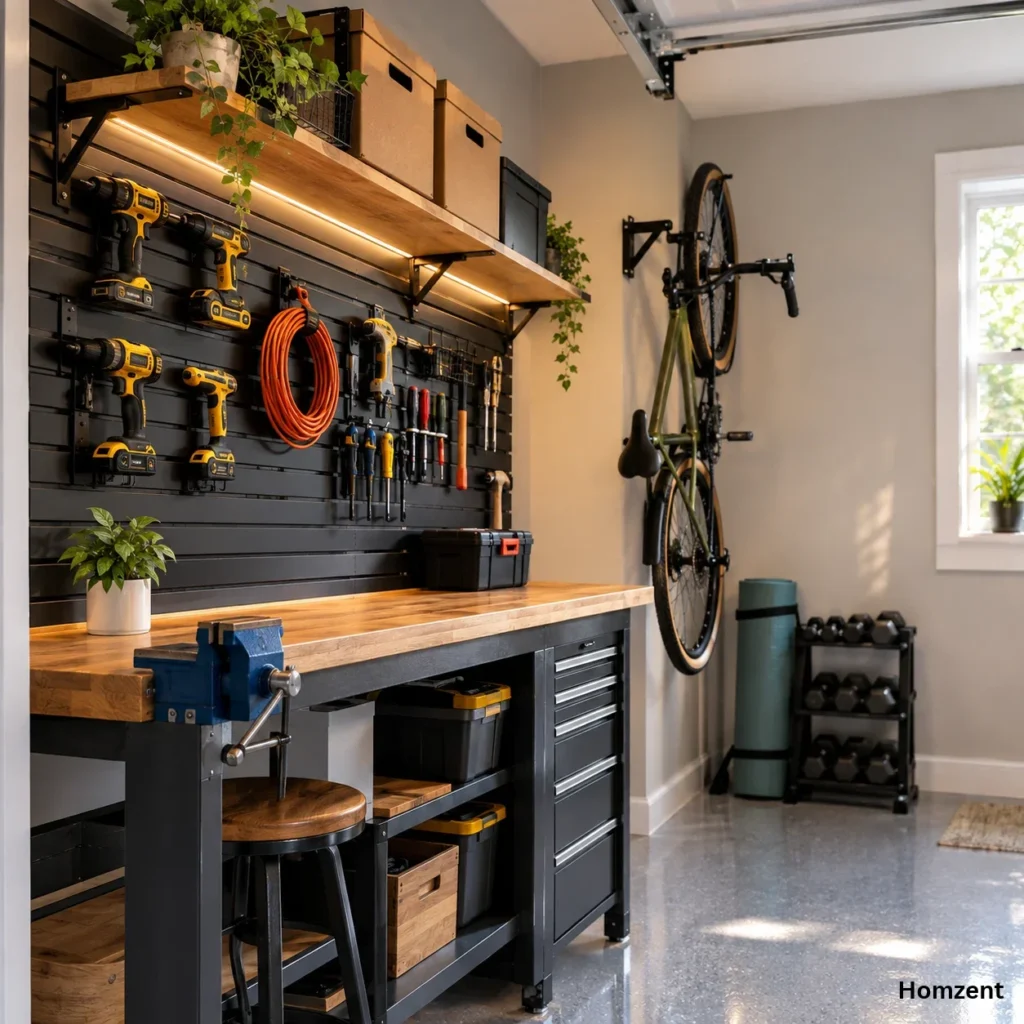
The best garage storage systems divide the space into three zones based on frequency of use and the physical characteristics of the items stored. This framework prevents the common mistake of stacking everything on the floor, which wastes vertical space and creates tripping hazards.
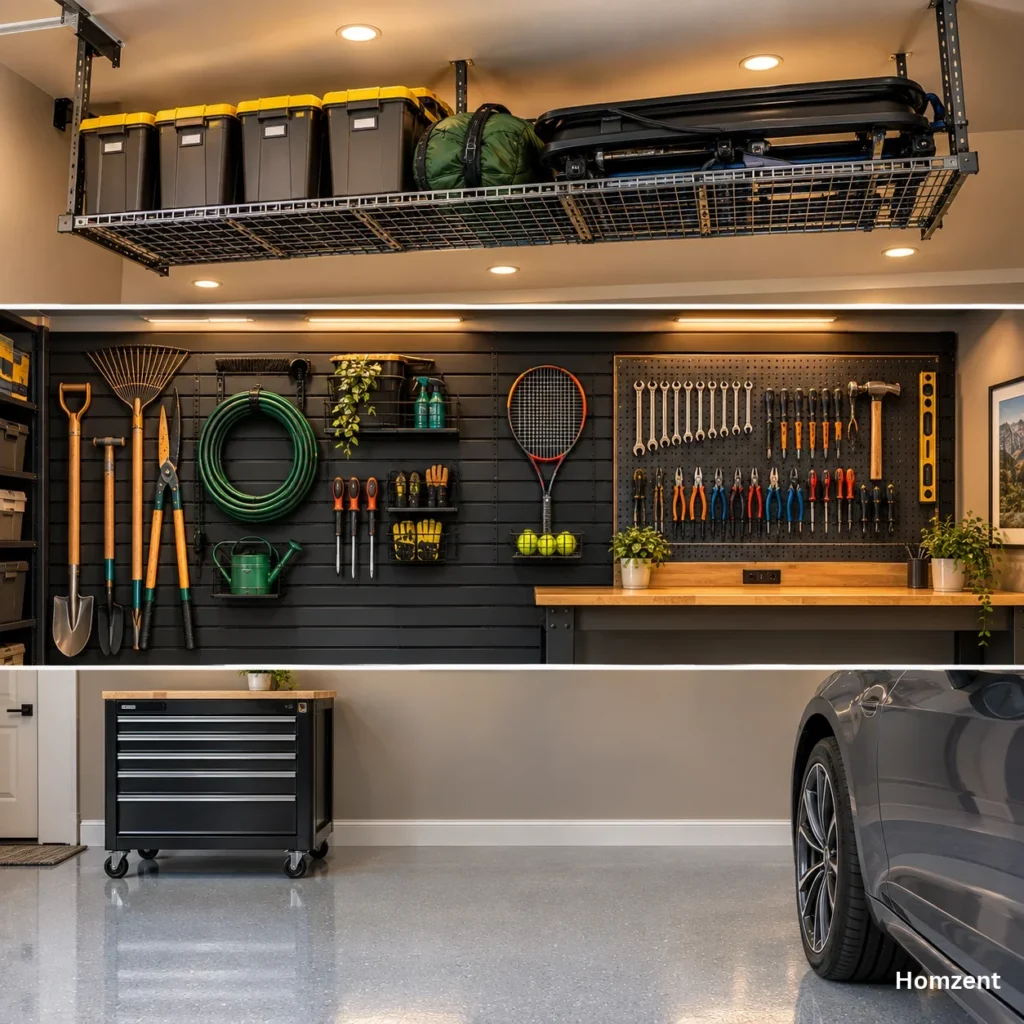
Overhead zone: The ceiling and upper wall areas store items used seasonally or rarely — holiday decorations, camping gear, roof racks, and bulk supplies. Overhead storage racks and ceiling-mounted platforms keep these items off the floor and out of the way. In 2025, overhead storage system installations increased by 15% in suburban homes as homeowners recognized the value of this underused space (Business Research Insights, 2026).
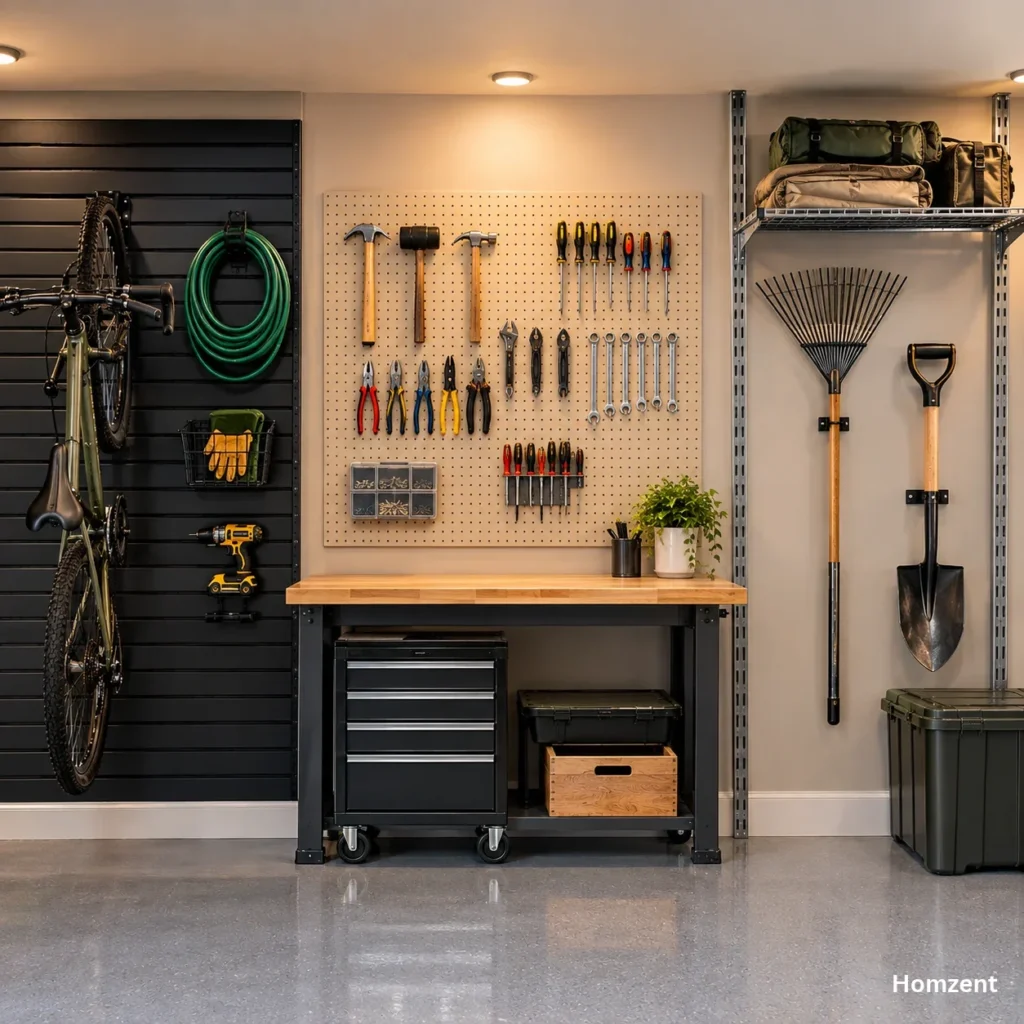
Wall zone: The middle section of the walls stores items used weekly or monthly — tools, sports equipment, garden supplies, and automotive accessories. Slatwall systems, pegboards, and wall-mounted shelving keep these items visible and within arm’s reach. Wall-mounted storage adoption expanded by 16% across urban residential housing in 2025 (Business Research Insights, 2026).
Floor zone: The floor itself is reserved for vehicles, large equipment, and workbenches. The goal is to keep as much of the floor clear as possible. Items that must sit on the floor — lawnmowers, pressure washers, tool chests — should be on casters or in designated bays.
Table
| Zone | Height | Best For | Storage Type |
|---|---|---|---|
| Overhead | 8+ feet | Seasonal items, bulk storage | Ceiling racks, loft platforms |
| Wall | 3–8 feet | Tools, sports gear, garden supplies | Slatwall, pegboard, shelving |
| Floor | Ground level | Vehicles, workbenches, large equipment | Cabinets on legs, mobile tool chests |
Overhead Storage Racks: Using Ceiling Space for Seasonal Items
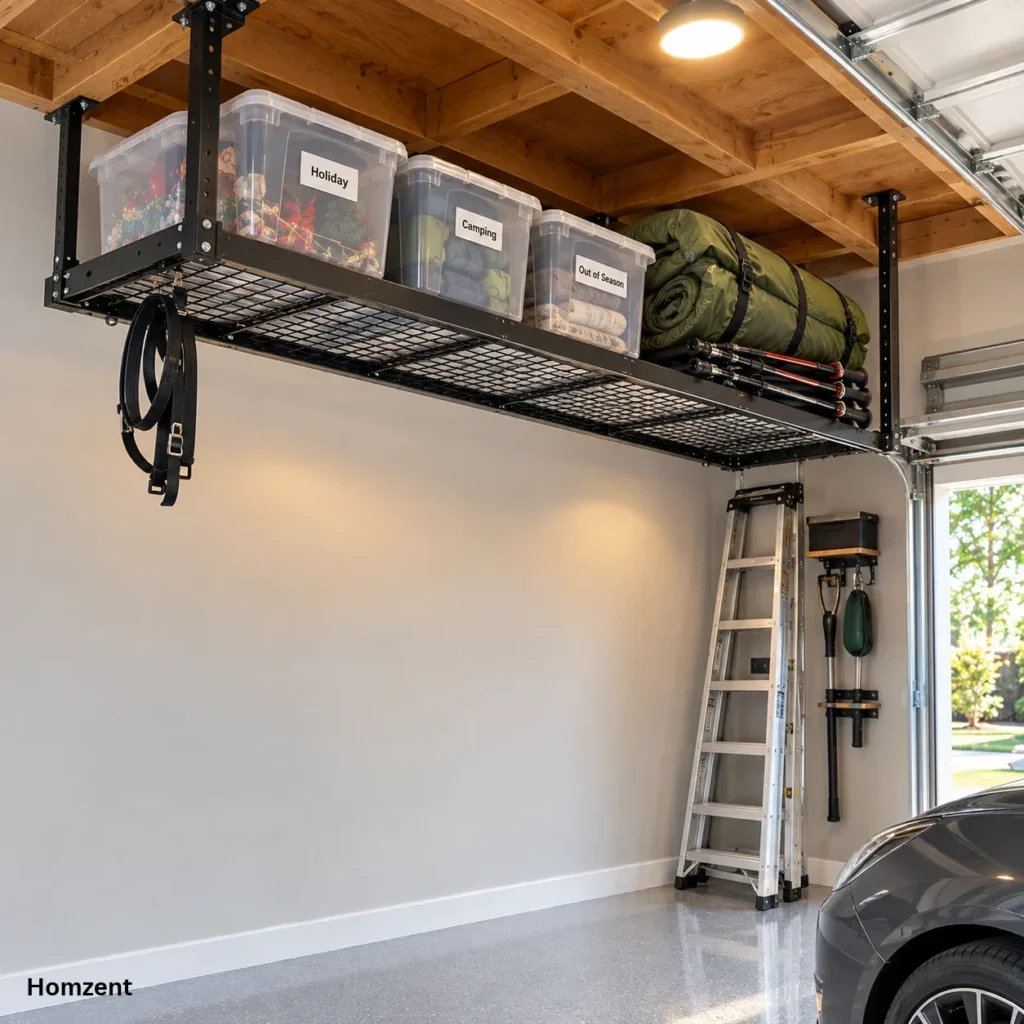
Overhead storage racks are the most underused garage storage solution. They attach to ceiling joists and create a platform 2 to 4 feet below the ceiling, turning empty air into usable storage.
Weight capacity is the key metric. Residential overhead racks typically support 250 to 600 pounds. Commercial-grade systems handle more. Fleximounts expanded its overhead product line in 2024 to support more than 300 pounds, driving a 13% increase in residential installation demand (Business Research Insights, 2026). Before buying, check your ceiling joist spacing — most racks attach to 16-inch or 24-inch centers. If your joists run the wrong direction, you may need to install a support board across them.
What to store overhead: Holiday decorations, camping gear, luggage, bulk paper goods, out-of-season clothing in bins, and roof racks or bike carriers. These are items you need a few times a year, not every weekend.
What not to store overhead: Heavy tools, anything you need frequent access to, or items sensitive to temperature swings if your garage is not climate-controlled. Climbing a ladder for a hammer you use daily is inefficient and unsafe.
Installation tip: Place the rack above the garage door track or in a corner where it does not interfere with the garage door or vehicle parking. Leave enough clearance below the rack for tall vehicles or for you to stand comfortably when loading and unloading bins.
Wall-Mounted Storage: Slatwall, Pegboard, and Track Systems
Wall-mounted storage turns empty wall space into organized, accessible storage for tools, sports equipment, and garden supplies. It keeps the floor clear and puts items at eye level where you can see and reach them.
Slatwall systems use horizontal grooves that accept hooks, baskets, shelves, and specialized holders. They are the most versatile wall system. A slatwall panel covers a large area and supports heavy items — bikes, ladders, power tools — when mounted into studs. Slatwall systems accounted for 38% of wall management installations in 2025 because of their compatibility with modular accessories (Business Research Insights, 2026). Brands like Flow Wall and ProSlat offer panels in various colors and sizes.
Pegboard is the classic wall storage solution. It is affordable, widely available, and works well for hand tools and small items. The downside is weight capacity — pegboard struggles with heavy power tools or bikes. It also looks more utilitarian than slatwall. Pegboard works best for a dedicated tool wall above a workbench.
Track systems use horizontal metal rails with vertical standards and brackets. They are common in retail and adapt well to garages. The advantage is adjustability — you can move shelves and hooks up and down the standards as your storage needs change. The disadvantage is that exposed standards and brackets look industrial.
What to store on walls: Hand tools, power tools, bikes, ladders, garden tools, sports equipment, extension cords, and cleaning supplies. The rule is: if you use it at least monthly, it belongs on the wall, not overhead or in a cabinet.
Modular Garage Cabinets: Enclosed Storage for a Finished Look
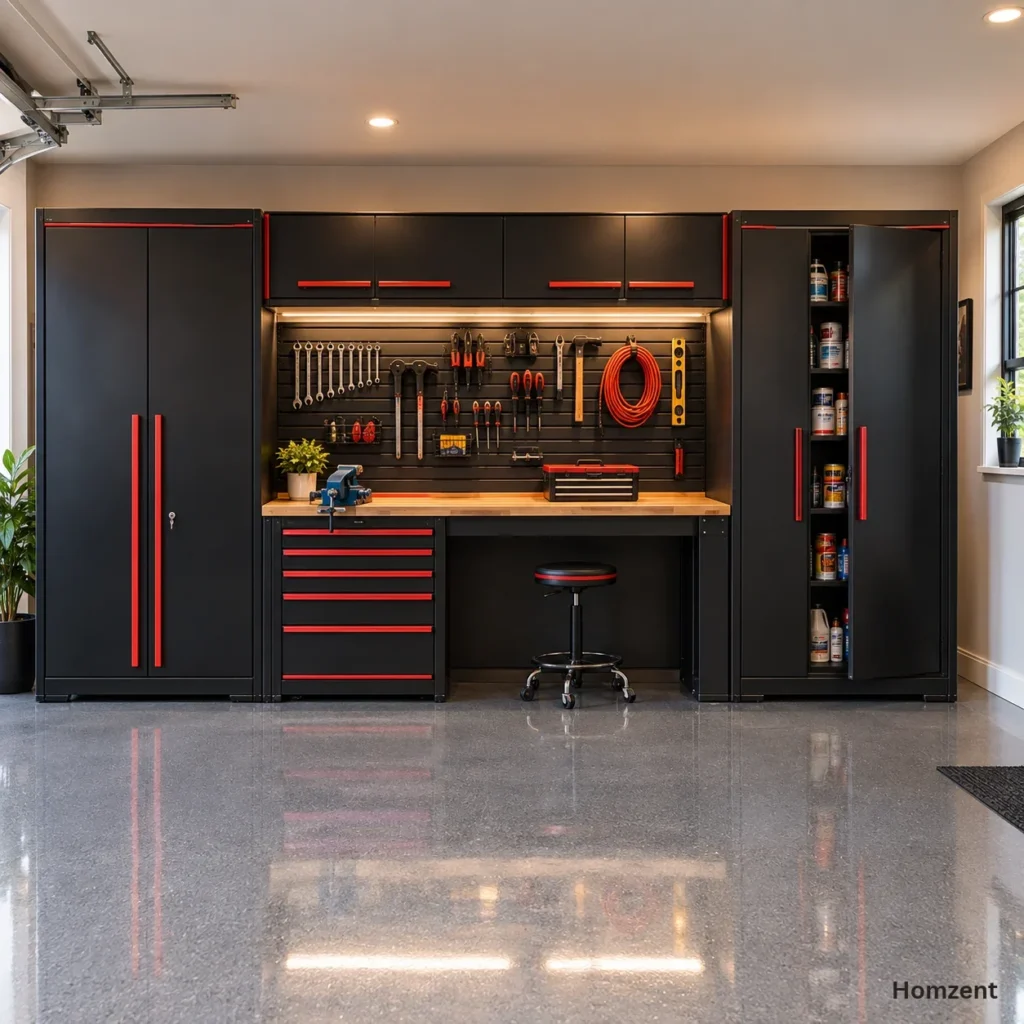
Garage cabinets are the premium option. They enclose clutter, protect items from dust and moisture, and give the garage a finished, room-like appearance. They dominate the market for a reason — garage cabinets held a 41.9% share of the global garage organization market in 2025 (Grand View Research, 2026).
Metal cabinets are the standard for durability. Powder-coated steel resists corrosion, dents, and moisture. Heavy-duty cabinets support 500+ pounds per unit. Metal-based storage systems represented 46% of installed units globally in 2025 (Business Research Insights, 2026). Brands like NewAge Products and Gladiator offer modular steel systems with load capacities exceeding 600 pounds (Business Research Insights, 2026).
Wood cabinets look warmer and work well in garages that double as workshops or man caves. They are less resistant to moisture and chemicals but can be sealed or painted for protection. Engineered wood options balance cost and durability.
Plastic/resin cabinets are the budget choice. They resist moisture and rust, assemble without tools, and work for light storage — gardening supplies, car care products, paint cans. They do not handle heavy tools or withstand impact as well as metal.
Modular vs. custom: Modular systems come in standard sizes that connect and expand. You buy a base set and add pieces over time. Custom systems are built to your exact dimensions and needs. Modular is more affordable and flexible. Custom is more expensive but maximizes every inch of space.
What to store in cabinets: Chemicals, paints, automotive fluids, power tools, seasonal clothing, and anything you want protected from dust or hidden from view. Lockable cabinets are essential if children access the garage.
Shelving Units: Open Storage for Quick Access
Shelving is the simplest and most affordable garage storage. It offers open, visible storage for items you grab regularly.
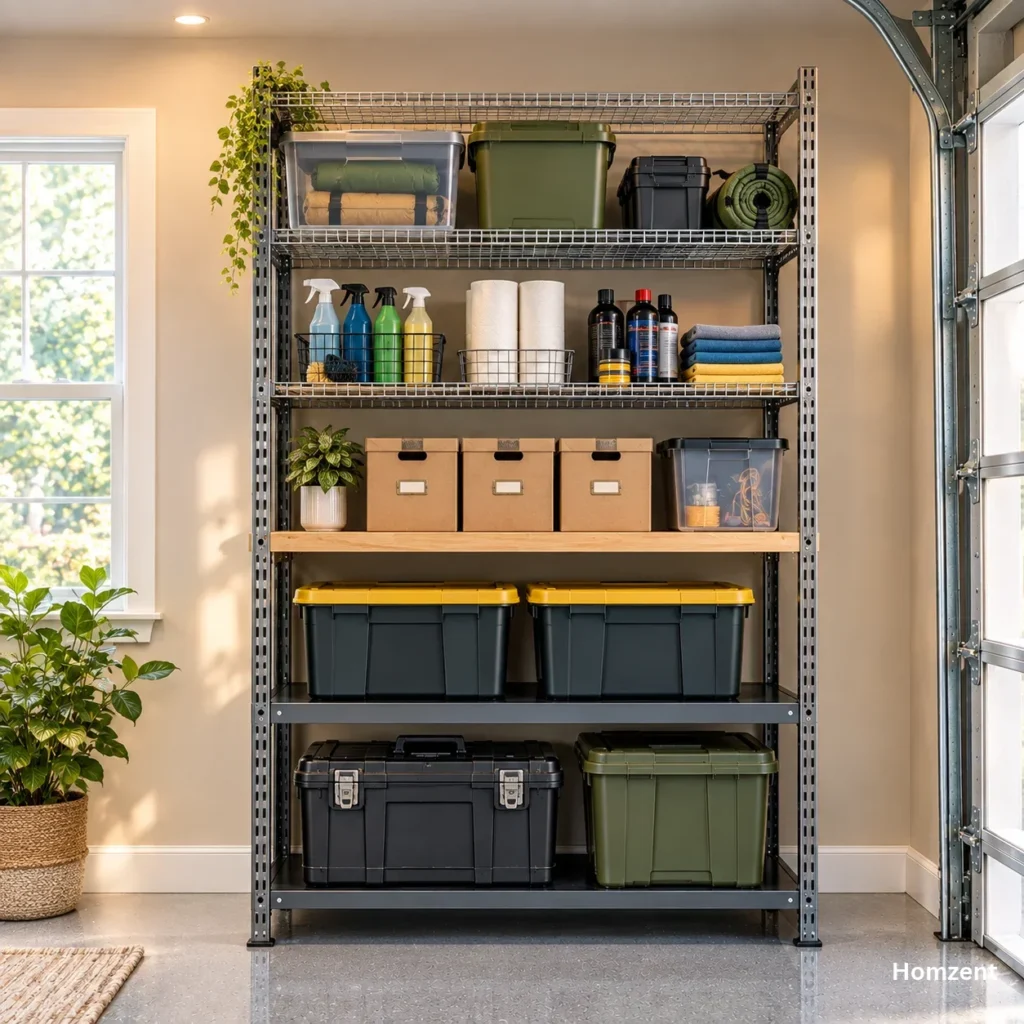
Wire shelving is the most common type. It is affordable, ventilated (good for damp garages), and easy to install. The downside is that small items fall through the gaps, and the wire surface does not support flat boxes well. Wire shelving units accounted for 27% of commercial garage applications in 2025 due to low maintenance and airflow benefits (Business Research Insights, 2026).
Solid shelving uses wood, laminate, or metal shelves with a flat surface. This is better for boxes, bins, and small items that would tip or fall through wire. Heavy-duty solid shelves support 1,000+ pounds per unit.
Adjustable shelving uses vertical standards with brackets that move to different heights. This flexibility matters because storage needs change — the shelf that held paint cans last year may need to hold storage bins this year. Adjustable shelving units saw 19% higher adoption than fixed shelving in 2025 because consumers preferred customizable layouts (Business Research Insights, 2026).
What to store on shelves: Paint cans, cleaning supplies, car care products, bulk supplies, storage bins, and frequently used tools. Reserve the lower shelves for heavy items and the upper shelves for light items you rarely need.
How to Plan Your Garage Storage System Step by Step
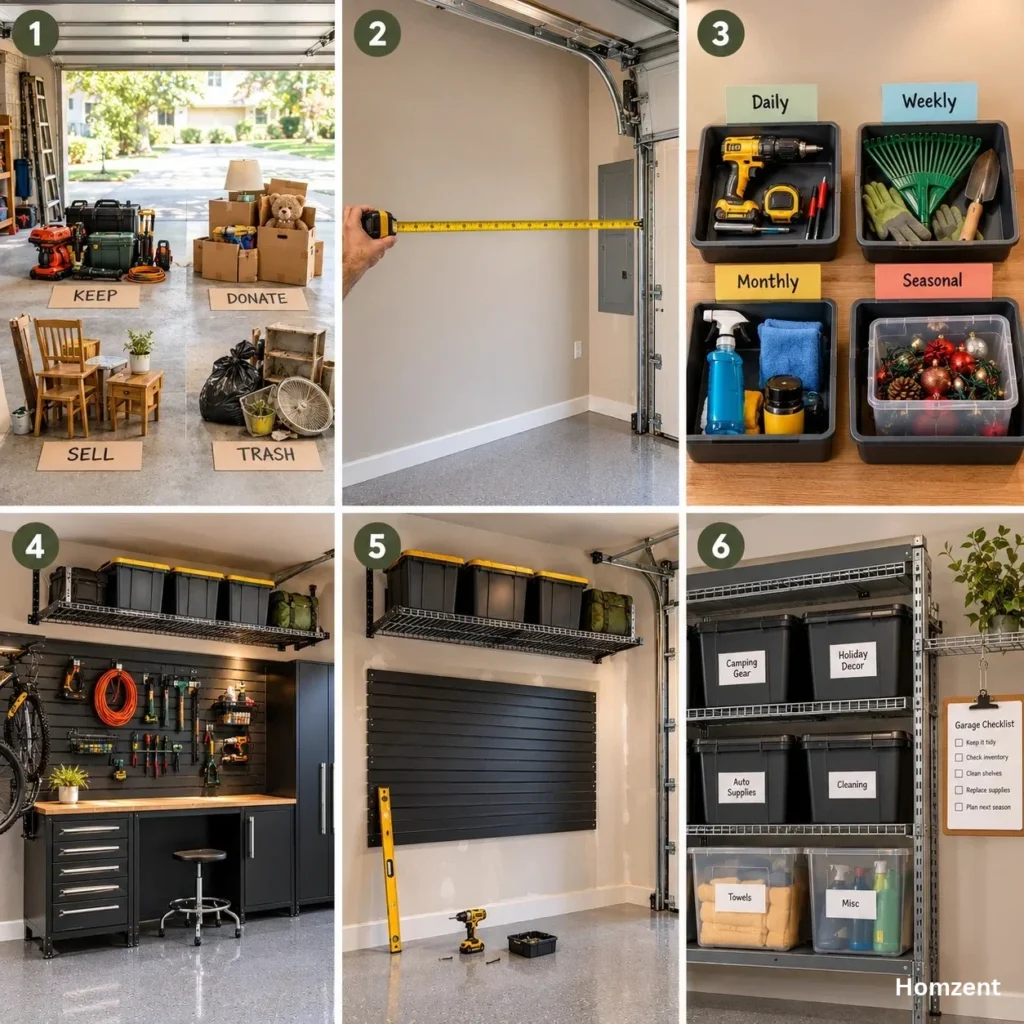
Empty the garage. Pull everything out onto the driveway or lawn. This is the only way to see what you own, what you can discard, and how much space you actually have. Sort into four piles: keep, donate, sell, trash. Most people find they can remove 30 to 40% of their garage contents immediately.
Measure your space. Record the width, depth, and height of your garage. Note the location of windows, doors, electrical panels, and the garage door track. Measure vehicle dimensions if you park inside. The usable wall space is what remains after accounting for these fixed elements.
Categorize your belongings. Group items by frequency of use: daily, weekly, monthly, seasonal. Daily and weekly items belong on walls or in cabinets at arm’s reach. Monthly items can go on higher shelves. Seasonal items belong overhead.
Choose your storage mix. Most garages need all three zones: overhead racks for seasonal items, wall systems for tools and bikes, and cabinets or shelving for everything else. A typical two-car garage might use one overhead rack (4×8 feet), 16 feet of slatwall, and a 6-foot cabinet base with a workbench top.
Install from the top down. Mount overhead racks first, then wall systems, then floor-based cabinets and shelving. This prevents working around installed pieces and reduces the risk of damage.
Label and maintain. Label bins and cabinet contents. Reassess every six months to remove items that have become clutter. An organized garage requires maintenance, not just a one-time setup.
Table
| Step | Action | Time Estimate |
|---|---|---|
| 1 | Empty and sort | 1 day |
| 2 | Measure space | 1 hour |
| 3 | Categorize belongings | 2–3 hours |
| 4 | Choose storage mix | 2–3 hours |
| 5 | Install from top down | 1–2 days |
| 6 | Label and maintain | Ongoing |
Common Mistakes to Avoid with Garage Storage Systems
Ignoring weight capacity: A shelf rated for 200 pounds will fail under 400 pounds of tools. Check load ratings before loading. Heavy-duty cabinets support 500+ pounds; budget plastic units may handle only 50.
Blocking vehicle doors: Storage installed too close to where car doors swing creates dents and frustration. Leave 24 to 30 inches of clearance around vehicle parking spots.
Storing everything at ground level: Floor clutter is the root of garage chaos. Use walls and ceiling first. The floor should be the last resort, not the default.
Forgetting about moisture: Garages are not climate-controlled. Metal items rust. Cardboard boxes sag and mold. Use plastic bins for storage, and choose powder-coated metal or resin cabinets in humid climates.
Buying before planning: Purchasing a cabinet set because it is on sale, then discovering it does not fit your wall space, is expensive. Measure first. Plan second. Buy third.
Neglecting lighting: A well-organized garage is useless if you cannot see what you need. Add LED shop lights above workbenches and motion-sensor lights inside cabinets.
Why You Can Trust This Guide
At Homzent, our goal is to provide practical, accurate, and easy-to-follow home organization advice that helps homeowners make confident decisions. This guide was carefully researched using current garage storage trends, product features, industry best practices, and expert organization techniques to ensure the information is relevant for 2026.
Our Research Process
To create this guide, we evaluated a wide range of garage storage solutions, including wall-mounted systems, modular cabinets, heavy-duty shelving, overhead storage racks, pegboards, and ceiling storage options. We compared each solution based on durability, storage capacity, ease of installation, space efficiency, long-term value, and suitability for different garage sizes.
Editorial Standards
Every recommendation in this article is selected based on functionality, practicality, and real homeowner needs—not promotional claims. Our content is regularly reviewed and updated to reflect new storage innovations, organization strategies, and industry developments, ensuring you receive reliable and up-to-date information.
Our Commitment to Readers
We believe the best garage storage system is the one that fits your space, budget, and lifestyle. That’s why our recommendations focus on helping you maximize storage, reduce clutter, and create a garage that’s safe, organized, and easy to maintain. Our mission is to deliver trustworthy, experience-driven content that helps you make informed decisions with confidence.
Frequently Asked Questions About Garage Storage Systems
What is the best garage storage system?
The best system combines three elements: overhead ceiling racks for seasonal items, wall-mounted slatwall or pegboard for tools and sports gear, and modular cabinets for enclosed, dust-free storage. This three-zone approach uses all available space — ceiling, walls, and floor — while keeping frequently used items accessible.
How much does a garage storage system cost?
A basic DIY setup with shelving and pegboard costs $200 to $500. A mid-range system with slatwall, overhead racks, and metal cabinets runs $1,500 to $3,000. A premium custom system with powder-coated steel cabinets, integrated lighting, and professional installation can reach $5,000 to $10,000.
What is the most popular type of garage storage?
Garage cabinets are the most popular, holding a 41.9% market share in 2025 because they protect items from dust and moisture while giving the garage a finished appearance (Grand View Research, 2026). Wall organization systems and shelving are close behind.
Does an organized garage increase home value?
Yes. A functionally adequate garage adds $5,000 to $25,000 in home value, and garage construction returns 60% to 85% ROI depending on location and materials (HomeLight, 2026). An organized interior with cabinets and storage systems adds functional value that appraisers recognize.
How much weight can overhead garage storage hold?
Residential overhead racks typically support 250 to 600 pounds when properly installed into ceiling joists. Always check the manufacturer’s rating and ensure your joists can handle the load. Distribute weight evenly and avoid exceeding the limit.
Can I install garage storage myself?
Yes. DIY installations accounted for 44% of residential garage storage purchases in 2025 (Business Research Insights, 2026). Overhead racks and wall systems require basic tools — a drill, stud finder, level, and ladder. Cabinet systems are heavier and may need a second person. Professional installation is recommended for custom systems or if you are uncomfortable working on ladders.
What should I store overhead versus on the wall?
Store seasonal items — holiday decorations, camping gear, luggage, bulk supplies — overhead because you access them a few times per year. Store tools, bikes, sports equipment, and garden supplies on the wall because you use them monthly or weekly and need them at arm’s reach.
Final Thought: Take Control of Your Space in 2026
Organizing your garage isn’t just about hiding away clutter—it’s about creating a safe, functional, and stress-free environment that works for your everyday routine. By shifting away from stacked floor bins and taking advantage of modern vertical wall tracks, heavy-duty overhead racks, and modular cabinet systems, you can easily reclaim up to 35% of your floor space while keeping every tool and seasonal item right where you need it.
Whether you’re setting up a dedicated workshop, making room to comfortably park your car again, or just sick of tripping over stray sports gear, investing in a high-quality garage storage system is the ultimate home upgrade for 2026.
🛠️ Ready to Build Your Dream Garage with Homzent?
Don’t let clutter hold your home back any longer. At Homzent, we provide premium, customizable garage storage solutions designed to fit your unique space, budget, and lifestyle. From ultra-durable slatwall systems to heavy-duty steel overhead racks, we have everything you need to transform your chaotic garage into a clean, modern workstation.
👉 [Explore Homzent Garage Storage Systems Today] and start building your custom, organized space.