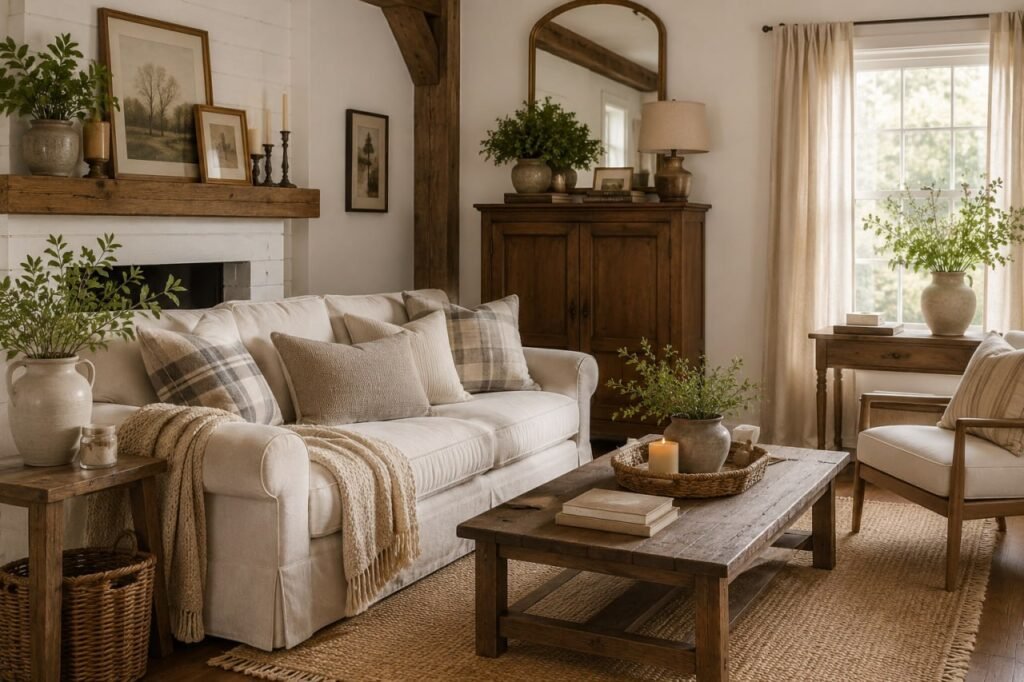
Farmhouse decor has a branding problem. Done well, it’s warm, collected, and genuinely timeless. Done poorly, it’s a “Live Laugh Love” sign, a barn door on a house with no barn, and shiplap on every single wall, a look so recognizable it’s become its own punchline.
The good news is that the line between the two isn’t about spending more money, it’s about restraint and a clearer sense of what farmhouse style is actually built on. Most of the ideas that make a room feel authentically farmhouse cost about the same as the ones that make it feel like a staged model home.
At Homzent, we think the most useful farmhouse decor guide isn’t a list of products, it’s an explanation of what to lean into and what to quietly retire. This guide covers both, the real foundations of the style, and the clichés worth skipping in 2026.
What Farmhouse Decor Actually Means
Strip away the trends and farmhouse style comes down to three consistent ingredients, sometimes called the three N’s: neutral colors, natural materials, and a mix of new and old.
Neutral colors form the backdrop, warm whites, creams, soft grays, and taupe, creating a calm, airy base that lets texture and materials do most of the visual work.
Natural materials bring the warmth, wood, linen, stone, wicker, and rattan replace glossy, synthetic finishes throughout the home.
New and old, mixed together, is what actually separates farmhouse from plain rustic or plain traditional. A sleek modern sofa paired with a genuinely vintage side table does more for the look than an entire room of matching “farmhouse collection” furniture ever could.
Farmhouse Clichés Worth Retiring
This is the section most farmhouse decor guides skip, and it’s arguably the most useful one if your goal is a room that still looks good in five years.
- Motivational word signs. “Gather,” “Blessed,” and “Live Laugh Love” defined the early farmhouse trend, but at this point they read as dated rather than charming.
- Buffalo check everywhere. A small dose of black-and-white or red-and-white buffalo check can work, but covering multiple surfaces in it tips a room into theme-park territory.
- Pre-distressed furniture. Furniture manufactured to look worn rarely holds up to scrutiny next to something with genuine age. A real thrifted or inherited piece almost always looks better, and is often cheaper.
- Shiplap on every wall. Shiplap works best as a single accent, a fireplace wall, a nook, an entryway. Applied everywhere, it starts to feel like a set rather than a home.
- Barn doors with no functional reason to exist. A sliding barn door installed purely for style, on a wall with no space constraint, is one of the more common signs a farmhouse room was styled rather than lived in.
The test worth applying to any farmhouse purchase: would you still want this piece if farmhouse style weren’t currently trending? If the honest answer is no, it’s probably a cliché rather than a foundation. This one question filters out most of the impulse buys that tend to age the worst.
The Old-New Balance That Makes It Work
Modern farmhouse specifically leans on contrast, and getting that balance right is what keeps the style from tipping into either cluttered country kitsch or sterile showroom modern.
- Pair one vintage piece with modern furniture per room. A single antique dresser, an inherited mirror, or a flea-market find next to clean-lined modern seating creates the contrast the style depends on.
- Use slipcovers for an easy, adjustable look. Slipcovered sofas and chairs bring a relaxed, farmhouse-appropriate softness, and can be washed or swapped seasonally without buying new furniture.
- Choose sleek over ornate for large furniture. Big pieces, sofas, dining tables, beds, read better in cleaner, more modern silhouettes, leaving the ornamentation to smaller accent pieces.
- Let function lead. Farmhouse design grew out of practical, working homes; furniture and decor that actually gets used holds up better than fragile, purely decorative pieces.
Farmhouse Color Palette Basics
Color in farmhouse decor is intentionally quiet, which is what allows texture and materials to carry most of the visual interest.
- Warm white as your primary wall color. A warm (not stark or cool) white brightens a room while keeping the overall feel soft and inviting.
- Layer in cream, taupe, and soft gray. These neutrals mix easily with wood tones and prevent an all-white room from feeling flat or clinical.
- Add black as a grounding accent. Black window frames, light fixtures, or hardware add contrast and a touch of modern edge against an otherwise soft palette.
- Reserve color for the kitchen. A pop of sunny yellow, cornflower blue, or sage green on cabinetry or an island works especially well in farmhouse kitchens, where a busier atmosphere can support more personality.
Materials and Textures That Define the Look
Texture does a lot of the work that color would otherwise carry in other design styles.
- Wood with visible grain. The more pronounced the wood grain on a table, chair, or beam, the more visual interest it adds, this is one detail worth not sanding away.
- Wicker and rattan. These natural woven materials connect indoor spaces to the outdoors and are a defining texture across farmhouse living rooms and entryways.
- Sisal or performance rugs over frilly ones. Farmhouse style favors a relaxed, low-maintenance feel, so simpler rug textures generally read more authentic than delicate, high-maintenance ones.
- Linen and cotton textiles. Slightly rumpled, natural-fiber curtains, throws, and pillow covers reinforce the laid-back, lived-in feel central to the style.
Room-by-Room Farmhouse Ideas
- Kitchen: Remove a few upper cabinets and replace them with open wooden shelves styled with everyday dishware, mason jars, and a few cookbooks. Shaker-style cabinet fronts and a farmhouse sink complete the look without requiring a full renovation.
- Living room: Layer in a jute or wool rug, a slipcovered sofa, and plaid or striped throw pillows for warmth. A staggered gallery shelf with a mix of art and personal objects keeps the room feeling collected rather than themed.
- Entryway: A round wood or matte black mirror has become close to a farmhouse essential, both for its reflective, light-enhancing effect and its shape, which softens the straight lines common elsewhere in the space.
- Bedroom: Keep walls white or pared-back and let a wood headboard, linen bedding, and a single vintage nightstand do the visual work instead of heavy patterns.
Budget Farmhouse Decor vs. Investment Pieces
| Factor | Budget Approach | Investment Approach |
| Furniture | Thrifted, secondhand, or flea market finds | Custom or solid wood furniture built to last |
| Materials | Peel-and-stick shiplap panels, budget linen blends | Real wood shiplap, natural linen and wool textiles |
| Best For | Renters, first attempts at the style, single-room refreshes | Long-term homeowners, whole-house farmhouse renovations |
| Authenticity | Genuine vintage pieces often look more authentic than new “farmhouse collection” items regardless of price | Custom millwork and true reclaimed wood offer the most architectural authenticity |
At Homzent, we’d actually argue budget and authenticity aren’t in conflict here, a real secondhand find frequently reads as more genuinely farmhouse than an expensive new piece manufactured to look distressed.
Common Farmhouse Decor Mistakes to Avoid
Buying an entire matching “farmhouse collection.” Furniture and decor purchased as a complete themed set tends to feel staged rather than collected over time, which undercuts the lived-in quality the style depends on.
Overusing distressed finishes. Too many intentionally worn pieces in one space can tip a room from cozy into visually chaotic and heavy rather than charming.
Skipping personal items for generic vintage decor. Family photos, local pottery, or inherited pieces do more for authenticity than mass-produced “vintage-style” signs and prints.
Mixing too many farmhouse sub-styles at once. Modern farmhouse, cottage farmhouse, and industrial farmhouse each have distinct materials and color tendencies; blending all three without intention creates visual confusion rather than character.
Prioritizing looks over function. Fragile or purely decorative furniture works against the practical, working-home roots the style is actually based on.
Frequently Asked Questions
What defines farmhouse decor style?
Farmhouse decor is generally defined by neutral colors like warm white and taupe, natural materials such as wood and linen, and a deliberate mix of new and old furniture and decor.
Is farmhouse decor going out of style?
Certain specific elements, like word signs and heavy buffalo check, have become cliché, but the broader style, rooted in natural materials and a warm, functional feel, has remained popular for decades and shows no sign of disappearing entirely.
How do I make farmhouse decor look modern, not outdated?
Balance vintage or rustic pieces with sleek, modern furniture, keep patterns and distressed finishes to a minimum, and choose one or two accent features, like a single shiplap wall, rather than applying the same element throughout the whole space.
What colors are used in farmhouse decor?
Warm white, cream, taupe, and soft gray form the base palette, often paired with black accents in hardware or lighting, with small pops of color like sage green or cornflower blue reserved mostly for kitchens.
How do I avoid farmhouse decor looking cliché?
Skip word signs, overused buffalo check, and pre-distressed furniture in favor of genuine vintage finds, personal items, and a restrained use of signature features like shiplap or barn doors.
What is the difference between farmhouse and modern farmhouse style?
Traditional farmhouse leans more heavily into rustic, vintage elements, while modern farmhouse balances those same natural materials and neutral tones with cleaner lines and more contemporary furniture silhouettes.
Do I need shiplap for farmhouse decor?
No, shiplap is a popular accent but not a requirement; many well-executed farmhouse spaces use it sparingly on a single wall or skip it entirely in favor of paint, wood paneling, or texture through textiles and furniture instead.
Can farmhouse decor work in a small apartment?
Yes, the core elements, natural materials, a neutral palette, and a mix of new and old pieces, scale down easily. Focus on one or two textural details, like a woven basket or a wood accent piece, rather than trying to fit in every signature farmhouse feature at once.
What furniture styles pair well with farmhouse decor?
Mid-century modern, industrial, and even some minimalist pieces pair surprisingly well with farmhouse staples, since the contrast between clean lines and rustic texture is part of what makes modern farmhouse style feel current rather than costume-like.
Final Thoughts
Farmhouse decor done well isn’t about buying every item in a themed collection, it’s about a consistent, restrained mix of natural materials, warm neutrals, and furniture that looks like it was gathered over time rather than purchased in a single afternoon. The clichés people make fun of usually come from too much of a good idea, not the idea itself.
Start with one or two genuine pieces, a real vintage find, a solid wood table, and build the rest of the room around restraint rather than volume. That’s the kind of thinking we try to bring to every style guide at Homzent.