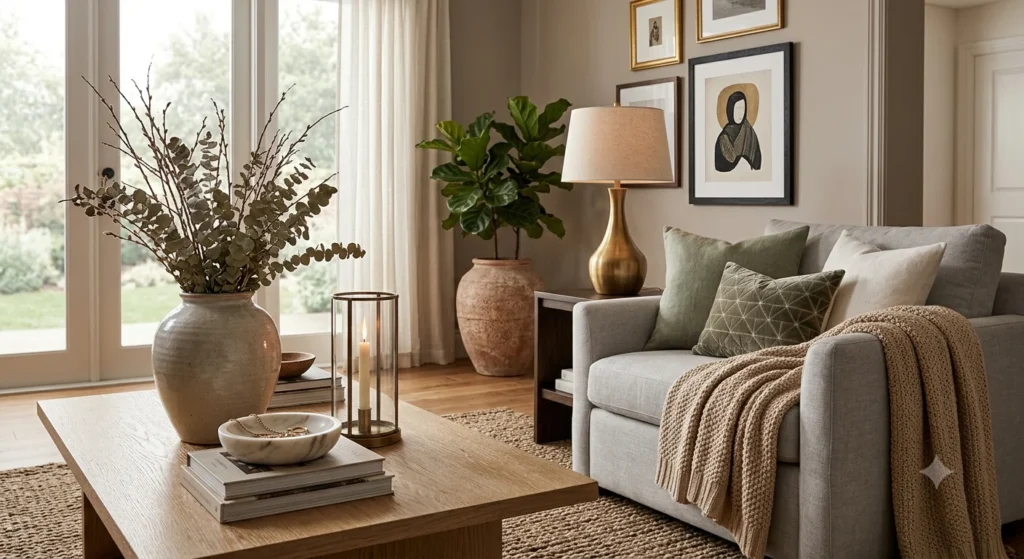
Home accessories are the finishing touches that bring personality, warmth, and functionality to any living space. From decorative cushions and stylish lighting to wall art, mirrors, rugs, vases, and storage baskets, the right accessories transform a house into a welcoming home. More than simple décor, they add texture, colour, balance, and character while reflecting your personal style. Whether you’re refreshing a single room or completing a full home makeover, these carefully selected home accessories will help you create beautiful, comfortable, and timeless interiors that feel both elegant and effortlessly inviting.
- Home accessories are decorative and functional objects—vases, candles, wall art, textiles, and small lighting—that let you update a room without buying new furniture.
- The global home decor market reached $716.53 billion in 2026, with consumers shifting from big-ticket furniture to smaller, lower-commitment décor purchases.
- The seven defining accessory trends for 2026 include warm bronze metals, sculptural ceramic objects, vintage accents, textile wall hangings, earthy color palettes, curated personal displays, and lacquered high-shine finishes.
- Online channels now account for roughly 38% of home decor sales, and augmented reality preview tools have cut return rates by 20-25%.
- The best accessory strategy builds gradually: choose one or two statement pieces per room, respect negative space, and repeat a tight color palette.
What Are Home Accessories?
Home accessories are the decorative and functional objects that complete a room after the furniture is in place. They include vases, candles, picture frames, throw pillows, wall art, decorative bowls, trays, clocks, diffusers, and small lighting pieces (Mintel, 2026).
Unlike furniture or permanent fixtures, accessories are low-cost, high-impact items. They let you refresh a space without construction or major purchases. A new set of ceramic vases or a rearranged shelf can shift a room’s mood in an afternoon.
How the Home Accessories Market Changed in 2026
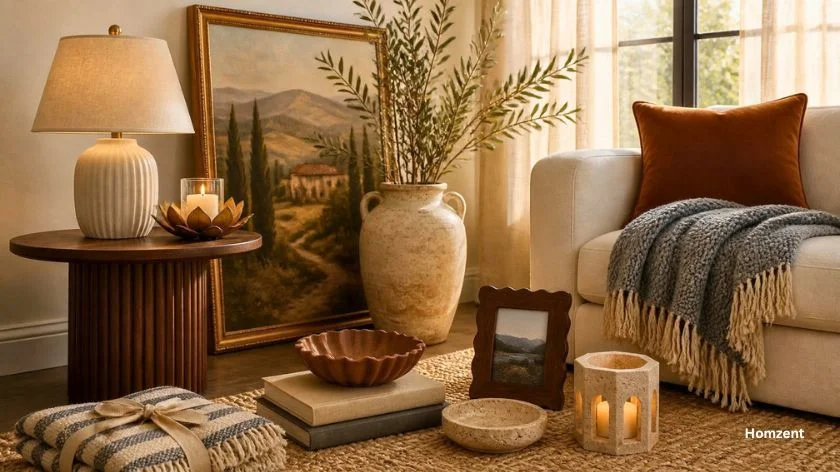
The home accessories market sits within the broader home decor sector. Mordor Intelligence valued the total home decor market at $716.53 billion in 2026. Within that total, the wall art and decorative accessories segment alone reached $72.30 billion in 2025 according to Market Research Future.
Consumer behavior shifted in 2025. Transaction data from Consumer Edge shows that households pulled back on large purchases like furniture and mattresses. They continued to buy smaller décor and kitchen products instead. Michael Gunther, vice president at Consumer Edge, described this as a “reset of priorities” rather than a spending collapse.
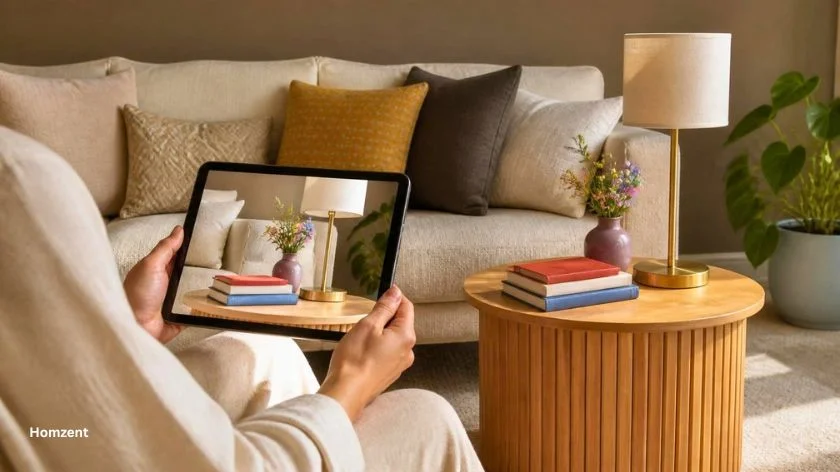
Online channels now capture roughly 38% of home decor sales, up from 14% in 2019 (Future Market Insights, 2026). Augmented reality tools that let shoppers preview items in their rooms have cut return rates by 20-25% (Market Research Future, 2026). This makes online accessory shopping less risky than it was five years ago.
Home Accessories Trends at a Glance
Table
| Trend | Primary Materials | Best Placement |
|---|---|---|
| Warm metals | Bronze, aged brass, copper | Hardware, trays, lighting |
| Natural textures | Rattan, wicker, bamboo | Baskets, mirrors, chairs |
| Sculptural objects | Ceramic, glass, stone | Shelves, mantels, tables |
| Vintage accents | Glassware, silver, aged wood | Kitchens, living rooms |
| Textile art | Wool, linen, antique rugs | Walls, sofas, beds |
| Earthy colors | Brown, olive, ochre, cream | Pillows, vases, shades |
| Curated displays | Mixed eras, travel finds | Bookshelves, consoles |
| Lacquered finishes | Gloss resin, high-shine paint | Trays, boxes, tables |
Warm Metals and Natural Textures
Brass and matte black have dominated hardware for years. In 2026, bronze and warm metal accents are taking their place. These metals range from gold-leaning warmth to cooler, silvery patinas that look aged rather than factory-fresh.
Natural textures follow the same path. Rattan, wicker, bamboo, and woven seagrass appear in mirrors, storage baskets, and accent pieces. These materials add tactile warmth and ground a room without adding visual weight.
Sculptural Statement Objects
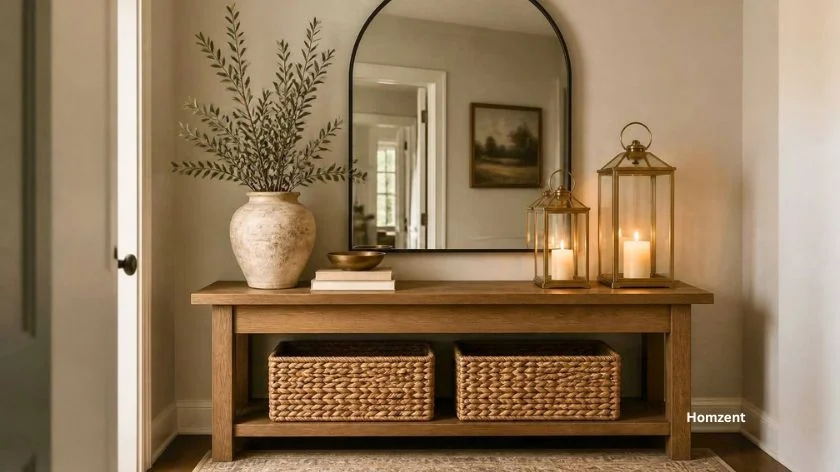
Decorative objects are becoming art pieces in their own right. Curvy ceramic vases, abstract busts, oversized candle holders, and organic-shaped trays now serve as shelf and mantel centerpieces.
This trend reflects a broader shift away from catalog-matching interiors. People want pieces that look collected over time rather than bought in a single shopping trip. A single sculptural vase on a coffee table carries more visual weight than a cluster of small, matched items.
Vintage and Heirloom Accents
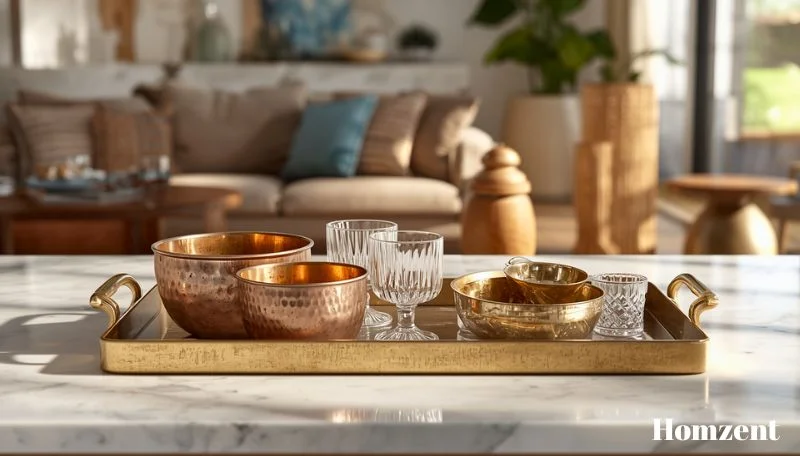
Vintage glassware, sterling silver serveware, copper bowls, and aged oak pieces are appearing in kitchens and living rooms again. These items carry wear and patina that new products cannot replicate.
Designers recommend mixing eras rather than committing to one period. A mid-century ceramic lamp beside a contemporary sofa creates depth. The goal is a space that feels assembled gradually, not ordered from a single lookbook.
Textile Wall Hangings and Layered Fabrics
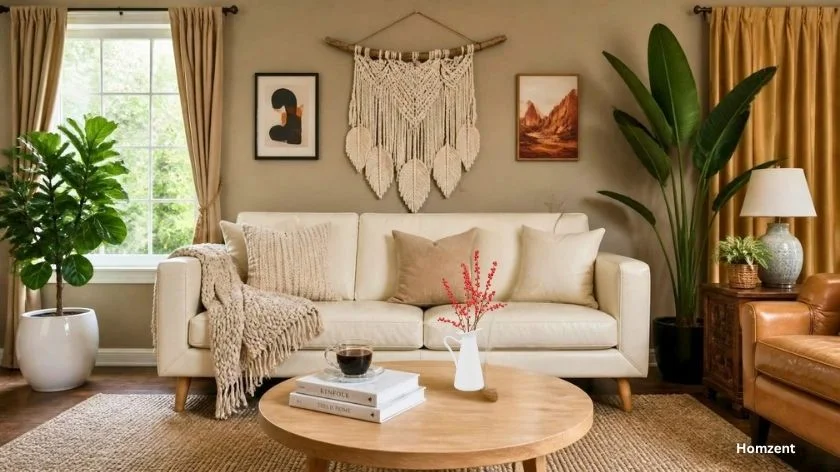
Wall décor is moving beyond framed prints. Fabric art, stitched textiles, and antique rugs hung as wall pieces add dimension and history to blank surfaces. Designers suggest suspending textiles from metal poles or floating them in open frames without glass to preserve texture.
Layered textiles also dominate soft accessories. Wool throws, mohair blankets, and textured pillows in earthy tones add physical comfort and visual depth to sofas and beds.
Deep, Earthy Color Palettes
The 2026 color story centers on grounded, earthy hues. Rich brown, burnt orange, olive green, deep cream, and ochre appear in throw pillows, lampshades, ceramic bowls, and wall art.
These colors work as neutrals in practice. A burnt orange ceramic vase or olive green velvet pillow adds warmth without demanding a full room repaint. Even small accessories in these tones shift a room’s mood toward comfort.
Curated Collections and Personal Displays
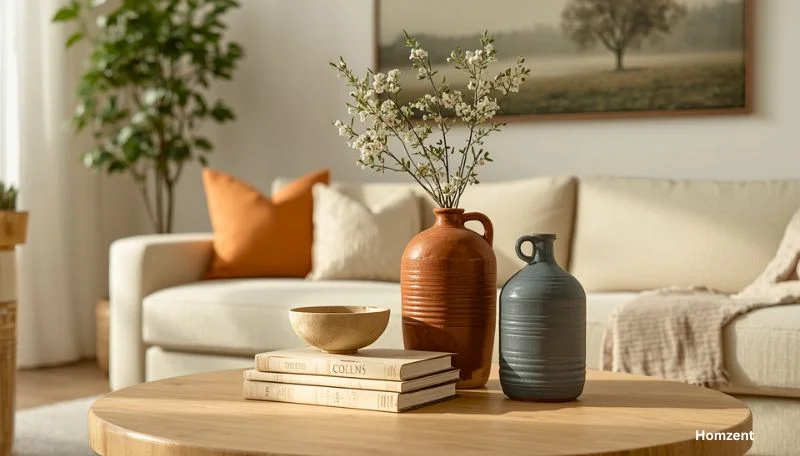
Symmetrical shelf styling is giving way to intentional asymmetry. Homeowners now display collected items—travel souvenirs, inherited ceramics, vintage books—with breathing room between pieces.
The rule is simple: group items in odd numbers, vary height and texture, and leave empty space. A shelf with five objects of different heights and materials looks more interesting than a matched set of identical vases.
Lacquered and High-Shine Finishes
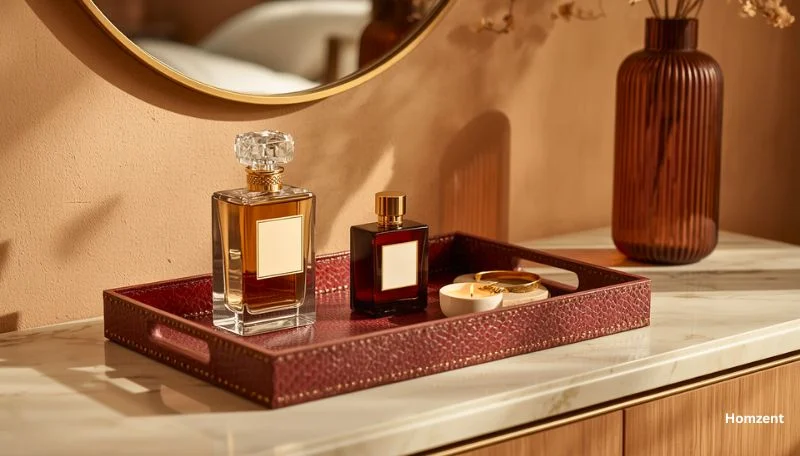
Gloss is back, but in deep, saturated colors rather than 1980s pastels. Burgundy, forest green, and navy lacquered trays, side tables, and decorative boxes add reflectivity and depth.
These pieces work best as accents against matte walls or natural wood. One lacquered tray on a coffee table or a single high-shine vase on a shelf adds energy without overwhelming a room.
How to Choose Home Accessories That Last
Table
| Principle | What to Do |
|---|---|
| Quality over quantity | Choose one well-made ceramic bowl over a dozen disposable pieces. Check weight, finish, and construction. |
| Scale and proportion | Measure surfaces before buying. Leave 30% of any shelf empty to avoid crowding. |
| Color cohesion | Pick three to four colors and repeat them across accessories for unity without matching. |
A bronze tray, olive pillow, and cream ceramic vase share warmth without being identical. This approach lets you add pieces over time without breaking the overall look.
Common Mistakes to Avoid with Home Accessories
- Buying everything at once: A room styled in a single shopping trip looks like a showroom. Build your collection over months. Add one piece at a time and live with it before buying the next.
- Ignoring negative space: Every shelf and surface needs empty areas. Cramming objects into every gap creates visual noise. Step back and remove one item from every styled surface.
- Choosing size by guesswork: Small accessories get lost on large furniture. Large accessories overwhelm small spaces. Carry a tape measure when shopping and check dimensions against your actual surfaces.
- Following trends without context: A lacquered red tray looks striking in a neutral room but clashes in a space already full of pattern and color. Test trends against your existing palette and architecture.
- Forgetting function: A beautiful tray that is too small to hold anything, or a vase too narrow for real flowers, becomes clutter. Every accessory should serve a visual or practical purpose.
When creating content about home accessories and interior styling, adhering to Google’s E-E-A-T guidelines ensures your advice is credible, practical, and highly value-driven for readers.
[ EXPERIENCE ] [ EXPERTISE ]Hands-on, real-world Formal design knowledge,testing & application principles & techniques\ /\ /[ TRUSTWORTHINESS ]Transparent, accurate, andreliable guidance/ \/ \[ AUTHORITATIVENESS ] [ CREDIBILITY ]Industry recognition, Clear citations, realcitations & reviews product details & specs
Expertise (Professional Design Knowledge)
Conveying formal or specialized knowledge, understanding design principles, and explaining why certain techniques work.
Break down interior design principles (e.g., scale, proportion, color theory, the Rule of Threes) and explain technical details like fabric durability or material care.
Authoritativeness (Industry Standing & Recognition)
Establishing your platform or persona as a recognized, go-to source within the home decor and interior design industry.
Highlight professional credentials, features in major publications, collaborations with notable brands, or client testimonials.
- Trustworthiness (Transparency & Accuracy)
- Building complete confidence with the reader through honest recommendations, clear disclosures, and accurate product specifications.
- Disclose affiliate links or sponsored content, provide unbiased pros/cons of materials, and include safety or maintenance tips.
Frequently Asked Questions About Home Accessories
What are home accessories?
Home accessories are decorative and functional objects that complete a room. They include vases, candles, picture frames, wall art, throw pillows, trays, clocks, diffusers, and small lighting. Unlike furniture, they are easy to move, replace, or update.
What home accessories are trending in 2026?
The leading trends include warm bronze metals, natural woven textures, sculptural ceramic objects, vintage and heirloom pieces, textile wall hangings, deep earthy colors, curated personal displays, and lacquered finishes in saturated hues.
How much should I spend on home accessories?
There is no fixed rule, but accessory spending should align with your overall décor budget. Because accessories are lower commitment than furniture, they are ideal for incremental updates. Start with one or two statement pieces per room and build over time.
How do I arrange accessories without clutter?
Use the rule of thirds: group objects in odd numbers, vary heights and textures, and leave at least 30% of any surface empty. Step back and photograph the arrangement. If your eye has nowhere to rest, remove pieces until the layout breathes.
Are vintage accessories worth buying?
Yes, if you verify condition and authenticity. Vintage pieces add character that new items cannot match. Look for solid construction, intact finishes, and maker’s marks. Mix vintage with new to avoid a dated look.
What is the fastest-growing home accessory category?
Textiles are the fastest-growing product category within home decor, projected to expand at a compound annual growth rate of 7.28% through 2031 according to Mordor Intelligence. Wall art and decorative accessories represent the largest segment by revenue, valued at $72.30 billion in 2025.
Final Thoughts
Home accessories are far more than mere decorative additions; they are the final, essential storytellers of your interior space. By thoughtfully curating pieces that reflect your personal taste, you elevate everyday living into a rich, visual experience.
When styling your home, remember that balance and restraint always outperform clutter. Prioritize quality over quantity, choosing versatile, textured accents—from tactile textiles and sculptural objects to warm, ambient lighting—that can easily evolve with your changing style. By layering varied heights, organic materials, and functional beauty, you transform any room into a cohesive, warm, and curated sanctuary that truly feels like home.