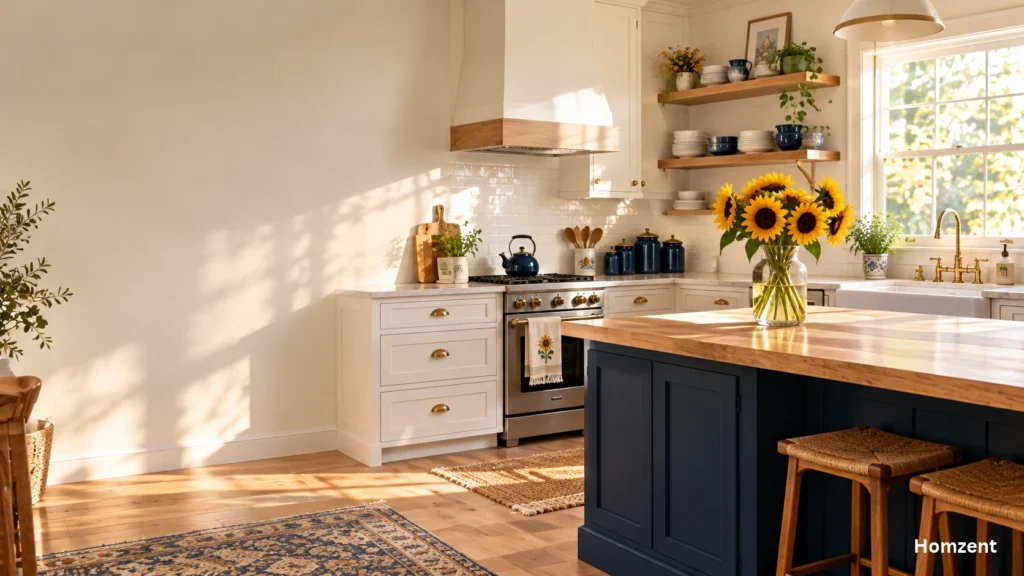
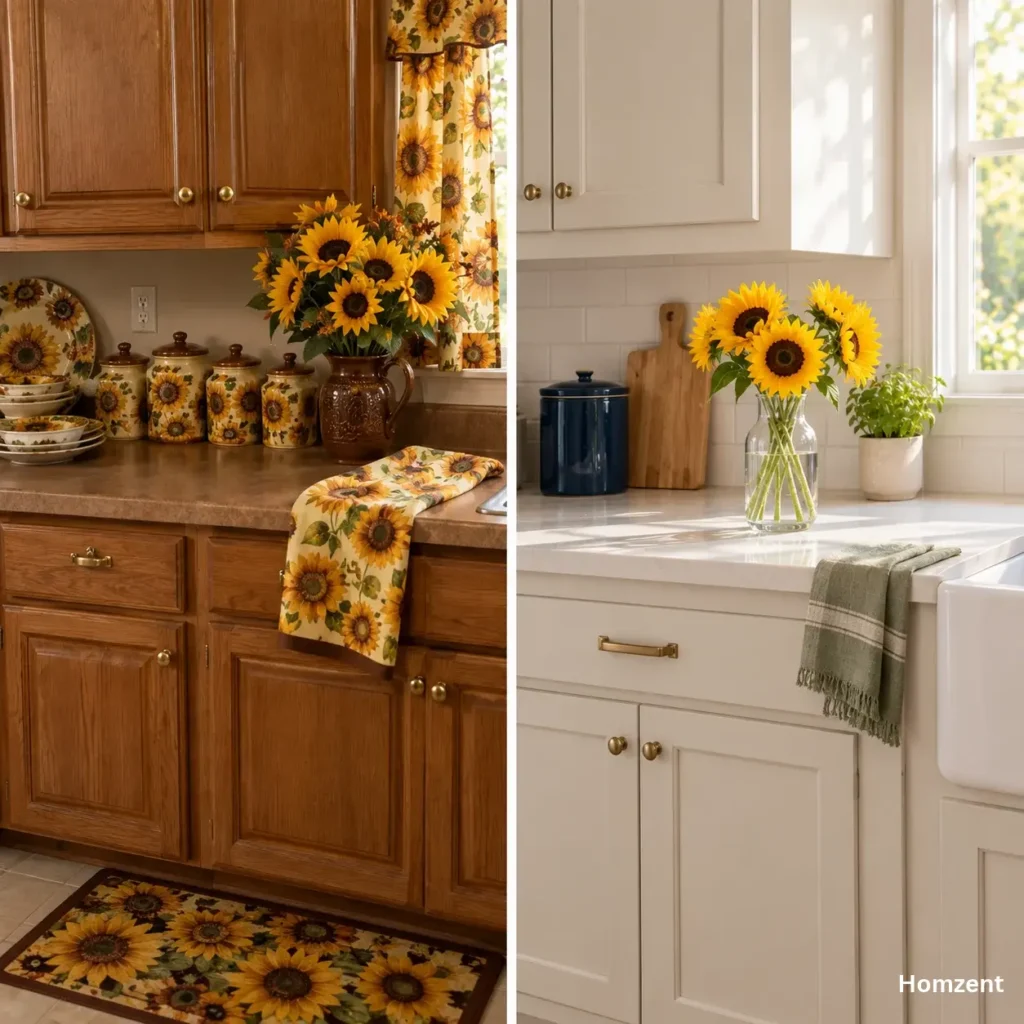
Sunflower kitchen decor has a bit of a reputation problem. For a lot of people, it immediately calls to mind a very specific 1990s look, sunflower curtains, sunflower canisters, sunflower dish towels, sunflower wallpaper, and a sunflower welcome mat, all in the same room, all at once.
That version of the trend earned its nostalgic, slightly dated reputation honestly. But the underlying idea, a warm, cheerful motif that works in almost any kitchen style, is genuinely a good one. The difference between a sunflower kitchen that feels current and one that feels like a time capsule usually comes down to restraint and color pairing, not the flower itself.
At Homzent, we think sunflower decor deserves a more modern treatment than it usually gets. This guide covers how to use the motif without overdoing it, the color pairings that actually work, and where a few well-placed sunflower touches do more than a kitchen full of them ever could.
Key Takeaways
- Restraint is what separates modern sunflower decor from dated sunflower decor. A few well-chosen accents outperform a full matching theme across every surface.
- Sunflowers don’t need to be paired only with yellow. Navy blue, earthy green, and warm neutrals create a far more current, balanced look than an all-yellow palette.
- Pick one dominant placement, not five. Choose either wall art, textiles, or accessories as your main sunflower touch, rather than layering the motif into every category at once.
- Real or dried sunflowers add more than silk ones. Fresh-cut or dried sunflowers bring texture and authenticity that artificial versions often can’t match.
- The motif works especially well in fall. Sunflowers read as a natural, easy seasonal decor choice for late summer and autumn without requiring a full permanent theme.
- Pair the motif with an existing style, not a standalone theme. Sunflower accents layered into farmhouse, cottagecore, or warm minimalist kitchens read as intentional rather than kitschy.
Why Sunflower Decor Feels Dated (and How to Avoid That)
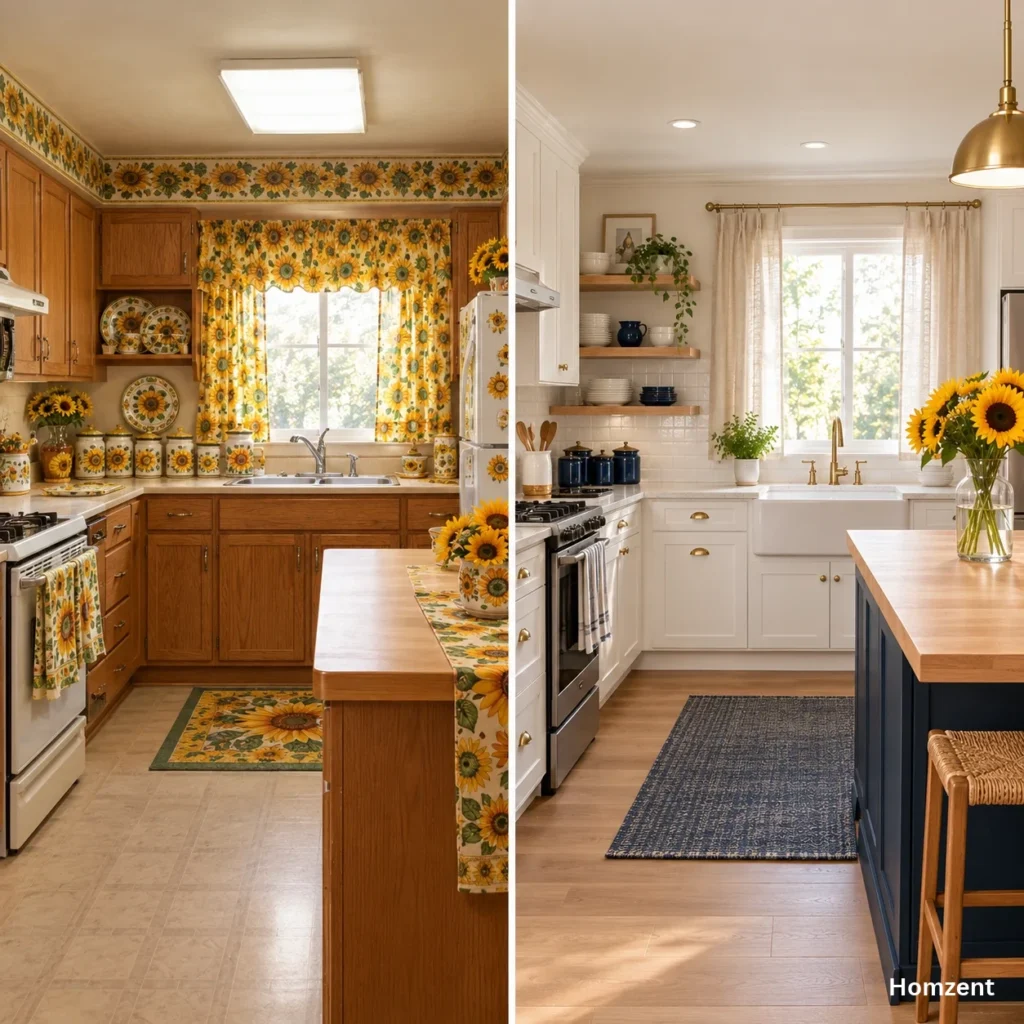
The core issue with most dated sunflower kitchens isn’t the sunflower itself, it’s the volume. When every visible surface, curtains, dishware, wall art, floor mat, and canisters, repeats the exact same motif, a kitchen stops looking personal and starts looking like a themed showroom.
The fix is simpler than it sounds: choose one or two categories to carry the motif, and let everything else in the kitchen stay neutral or tied to a broader design style. A single piece of sunflower wall art in an otherwise modern farmhouse kitchen reads as a charming, intentional detail. The same motif repeated across ten different items reads as a costume rather than a design choice.
A useful test before adding another sunflower item: if you removed everything else sunflower-themed, would this piece still feel appropriate on its own? If the honest answer is that it would feel out of place without the matching set around it, it’s probably contributing to theme overload rather than genuine style. This same test applies well beyond sunflower decor, but it’s especially useful here, since the motif is so easy to buy as a pre-matched set.
The Color Pairing Secret: It’s Not Just Yellow-on-Yellow
One of the biggest, most overlooked shifts that modernizes sunflower decor is the color palette surrounding it. Most dated sunflower kitchens pair the flower with more yellow, more brown, and more yellow again. Current sunflower decor pairs it with contrast instead.
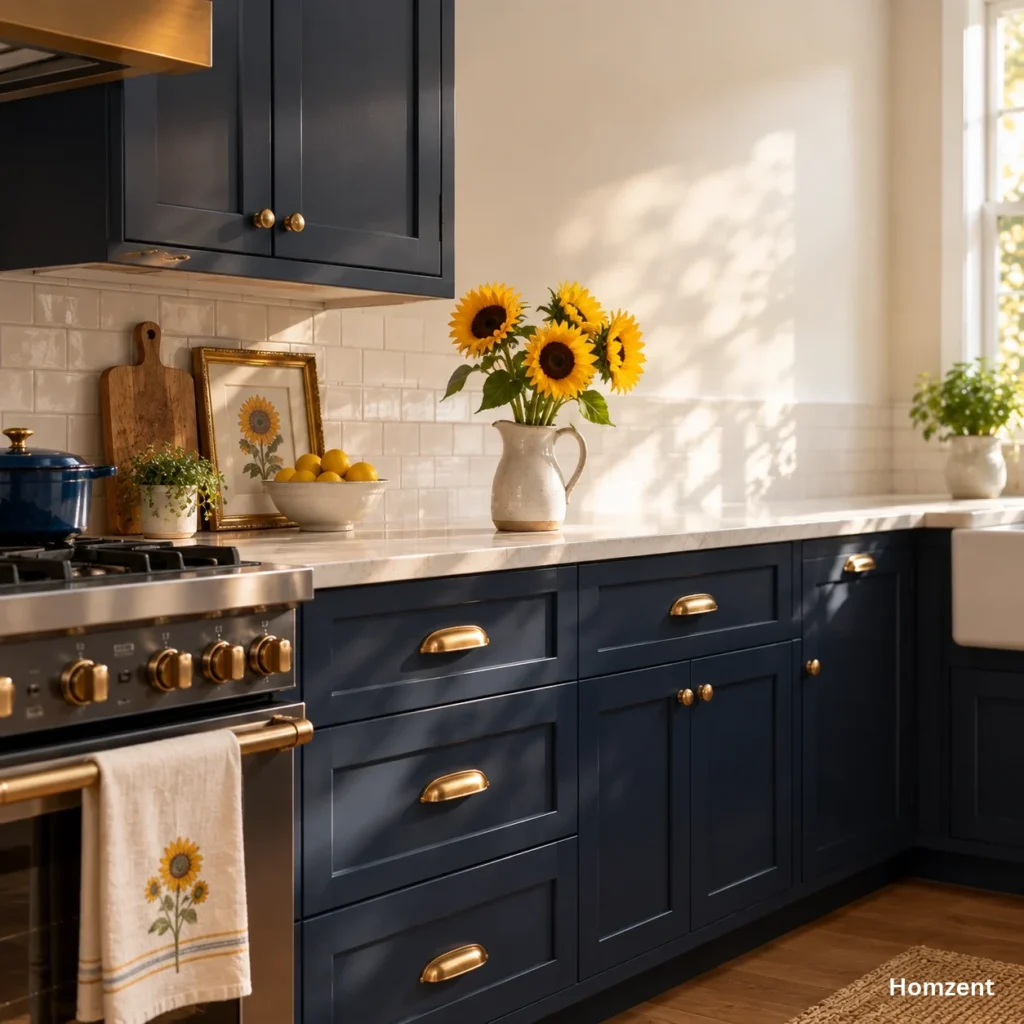
- Navy blue. This pairing has become one of the more popular current combinations, giving the warm yellow of the sunflower a crisp, grounded backdrop rather than an overwhelming wash of matching warmth.
- Earthy or sage green. A soft green base lets sunflower accents feel like a natural, garden-inspired detail rather than the dominant color story of the room.
- Warm neutrals. Cream, taupe, and soft white walls or cabinetry let a few yellow accents stand out as intentional pops of color rather than blending into an all-yellow room.
Choosing one of these as your kitchen’s actual base palette, with sunflower elements as the accent rather than the main event, is the single biggest shift between a dated sunflower kitchen and a current one. Think of the sunflower as the punctuation in the room’s color story, not the entire sentence.
Where to Place Sunflower Accents
Since restraint is the goal, choosing the right one or two placements matters more than trying to cover every surface.
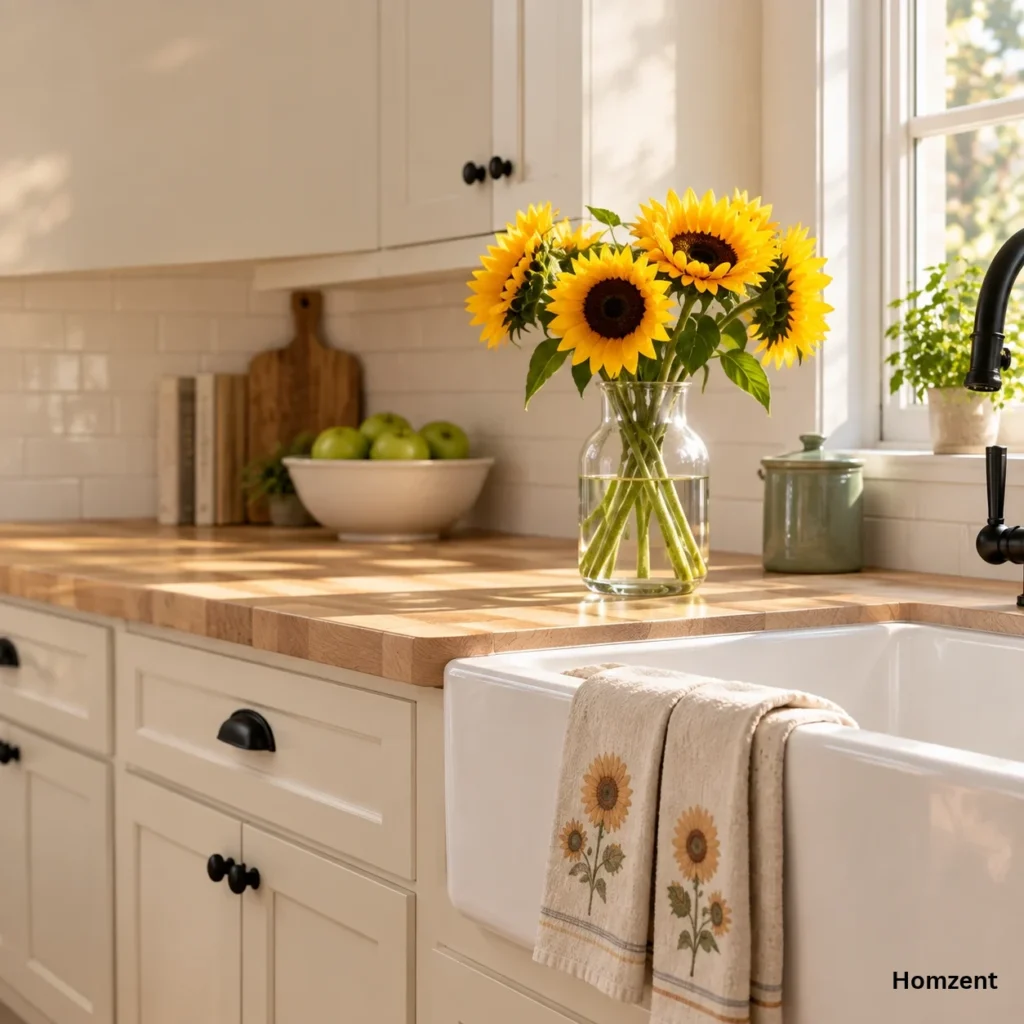
- Textiles. Dish towels, a table runner, or a set of cloth napkins are some of the easiest, most swappable ways to bring in the motif without any permanent commitment.
- A single statement wall piece. One framed print, a wall clock, or a small metal sculpture featuring sunflowers can act as a clear focal point without needing supporting pieces around it.
- Small kitchen accessories. A sunflower-painted spoon rest, a set of salt and pepper shakers, or a napkin holder add personality in small, low-commitment doses.
- A single, well-placed centerpiece. A vase of fresh or dried sunflowers on the table or counter delivers a strong visual impact without requiring any permanent decor changes at all.
Choosing two of these categories at most keeps the look intentional. Layering in all four at once starts to edge back toward theme overload. If you’re unsure which to start with, textiles are the lowest-risk entry point, since they’re inexpensive to change again if your taste shifts.
Sunflower Wall Decor and Art Ideas
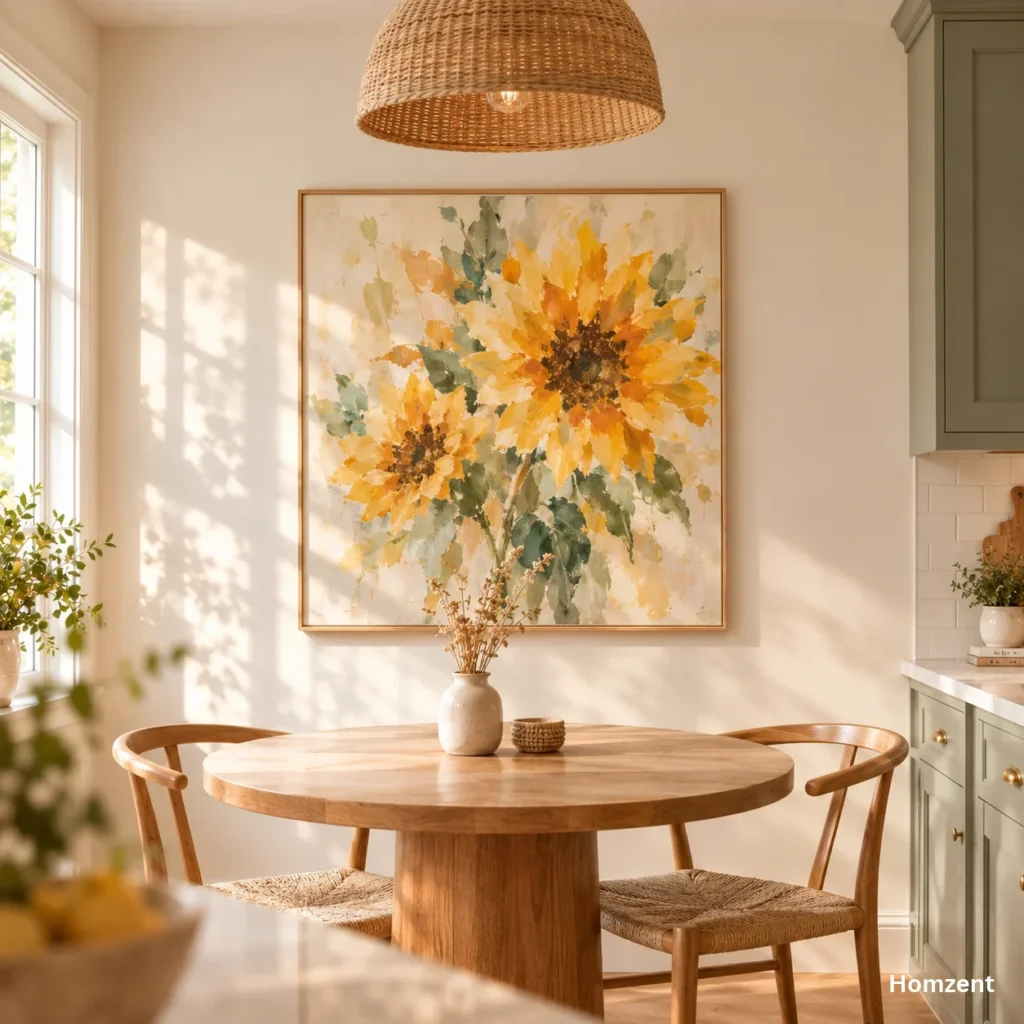
Wall decor is where sunflower motifs can make the strongest single statement, especially when treated as one focal piece rather than a full gallery.
- Choose one large piece over several small ones. A single, well-scaled framed print or canvas above a dining table or open counter reads as more curated than a scattered collection of small sunflower items.
- Look for watercolor or abstract interpretations. These feel more current than literal, photo-realistic sunflower prints, which tend to read as more dated.
- Consider a sunflower wall clock as a dual-purpose piece. This adds function alongside the motif, which helps it feel less purely decorative and more integrated into the room.
- Try removable sunflower wallpaper for a temporary accent. A single accent wall or backsplash in sunflower-patterned peel-and-stick wallpaper delivers a bold statement that’s easy to remove later if your style shifts.
Real vs. Faux Sunflowers
The flowers themselves, not just the motif in art and textiles, are worth a closer look, since real and dried versions typically outperform silk ones.
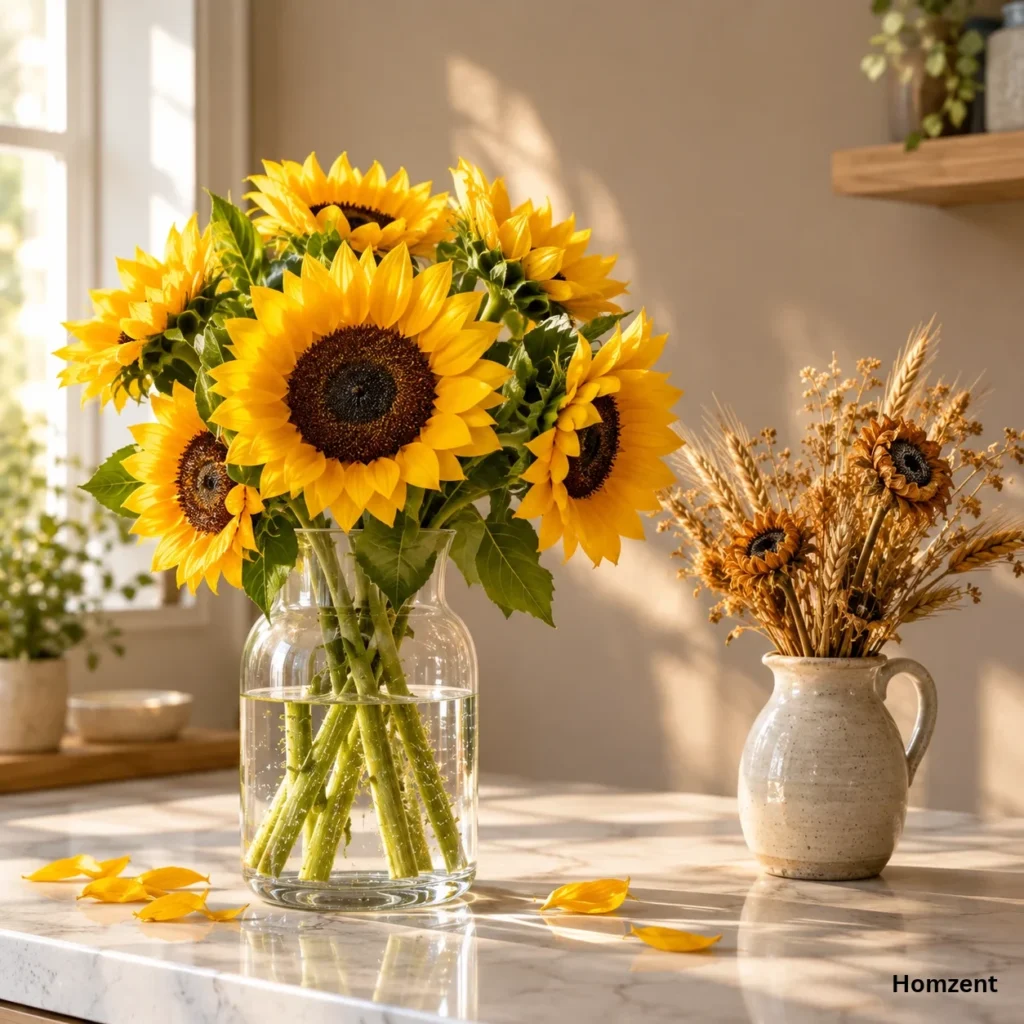
- Fresh-cut sunflowers add the most authentic impact. A simple vase on the counter or table brings genuine texture, scent, and seasonal freshness that no printed motif can replicate.
- Dried sunflowers offer a longer-lasting alternative. These retain much of the flower’s texture and warm color while lasting significantly longer than fresh-cut stems.
- Choose higher-quality silk over cheap plastic-look versions if going faux. Budget artificial sunflowers can look noticeably synthetic up close, while higher-quality silk versions hold up better as a permanent centerpiece.
- Rotate real or dried sunflowers seasonally. Treating them as a rotating, temporary accent rather than a permanent fixture keeps the kitchen feeling fresh rather than static.
Sunflower Decor as a Seasonal Choice
One of the easiest ways to use this motif without long-term commitment is to treat it as a seasonal decor choice rather than a permanent kitchen identity.
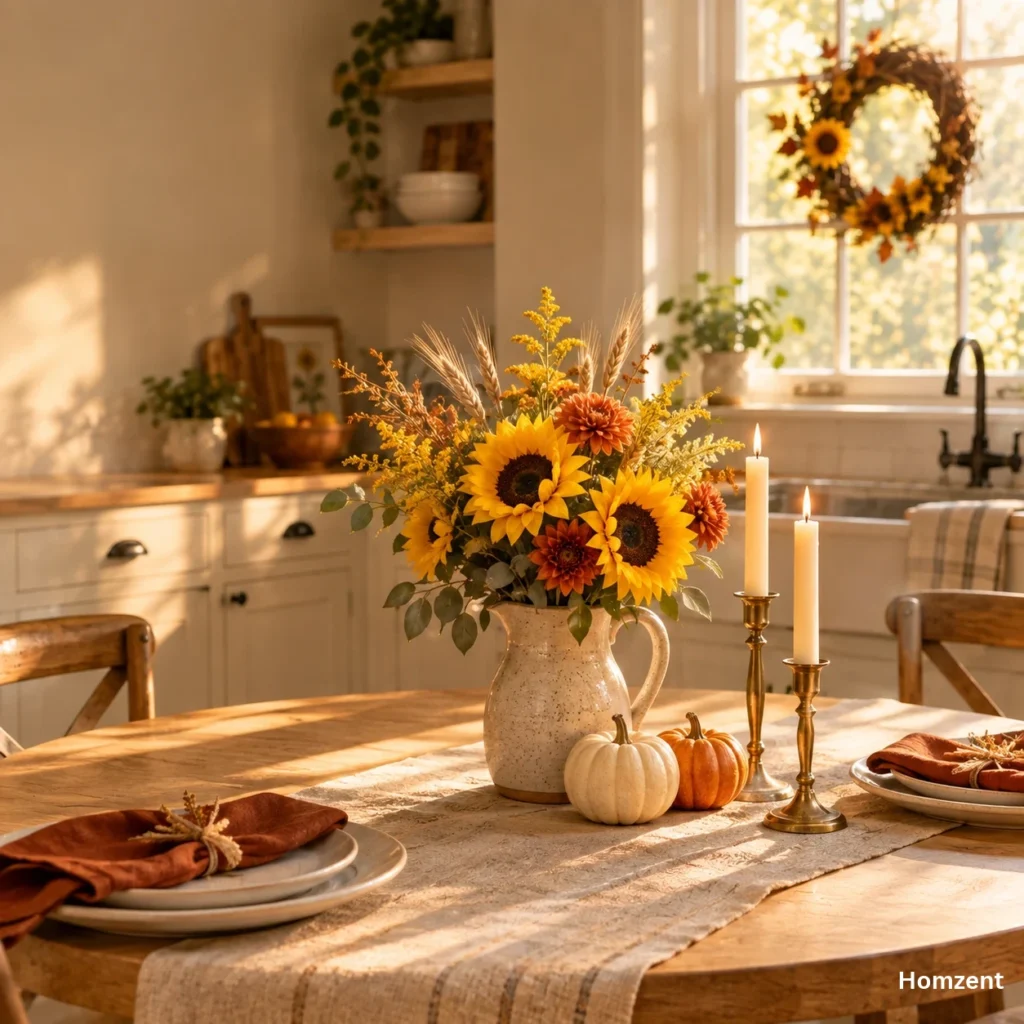
Sunflowers bloom in late summer and early fall, which makes them a natural fit for autumn decorating in particular. A rotation of sunflower centerpieces, a seasonal table runner, or a wreath during these months, swapped out for something else the rest of the year, delivers the cheerful impact without requiring the whole kitchen to commit to the theme permanently.
Sunflower Decor by Existing Kitchen Style
Since sunflower decor works best layered into a broader style rather than standing alone, it helps to know how the motif actually fits into a few common kitchen looks.
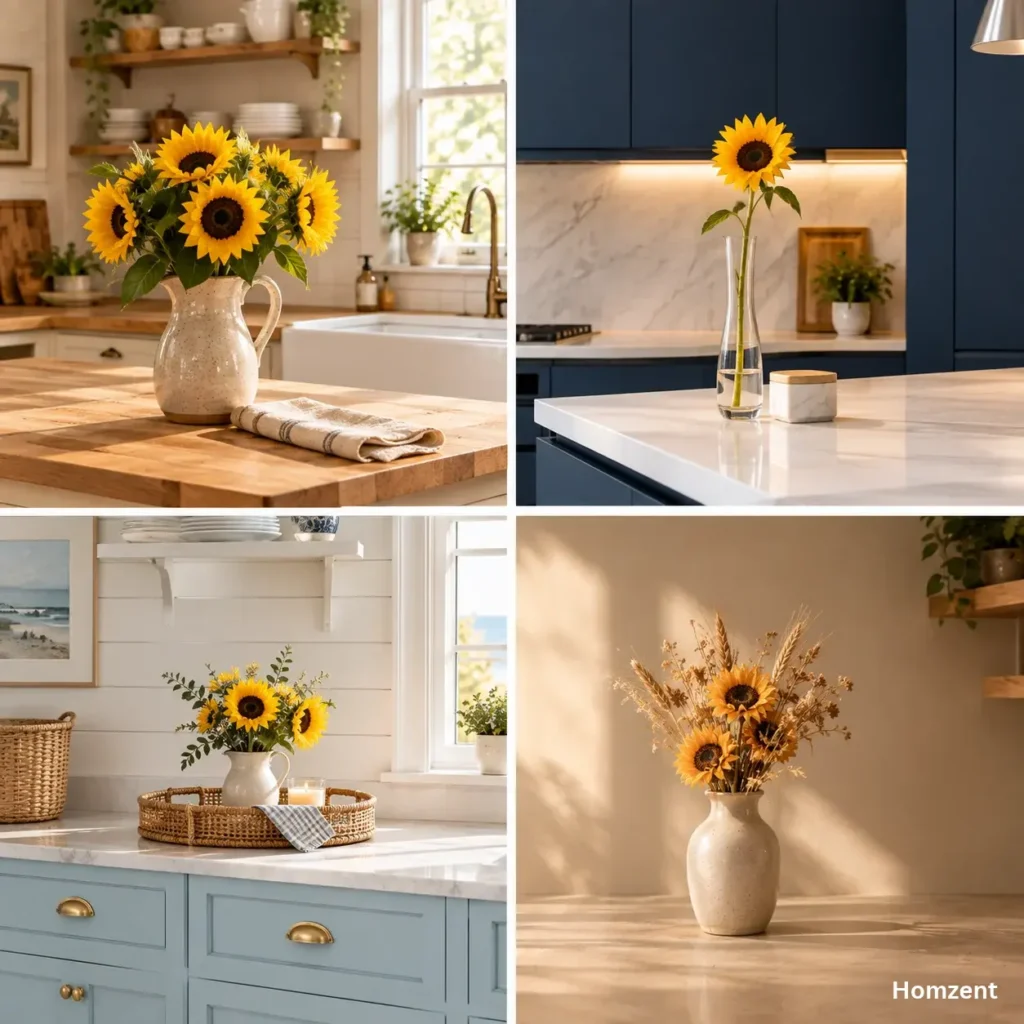
- Farmhouse kitchens. This is the most natural pairing, since farmhouse style already leans on natural materials, warm wood tones, and a slightly rustic feel. A single wooden sunflower sign, a stoneware centerpiece, or linen dish towels fit right in without needing any extra justification.
- Cottagecore kitchens. Sunflowers reinforce the garden-inspired, slightly romantic feel cottagecore is built around. Fresh or dried stems in a vintage pitcher, paired with soft floral textiles, work especially well here.
- Modern kitchens. This pairing takes a bit more restraint. A single abstract or watercolor sunflower print, kept to clean lines and a navy-and-white or all-neutral base palette, prevents the motif from clashing with the kitchen’s minimal, streamlined feel.
- Coastal or cottage kitchens. Pairing sunflowers with white, soft blue, and natural rattan or wicker accents creates a breezy, seasonal look that reads as intentional rather than themed.
- Warm minimalist kitchens. A single dried sunflower arrangement in a simple ceramic vase adds a touch of color and texture without disrupting the pared-back, clutter-free foundation this style depends on.
Matching the motif to a style you’re already working within, rather than treating “sunflower” as the style itself, is what keeps the look feeling like a natural extension of the room instead of a theme bolted onto it. If you’re not sure which style your kitchen already leans toward, look at your existing cabinetry and countertop material first, since that usually points clearly toward one of these directions before a single sunflower accent ever enters the room.
Budget Sunflower Decor vs. Investment Pieces
| Factor | Budget Approach | Investment Approach |
| Materials | Printed dish towels, budget vases, peel-and-stick wallpaper | Original art, hand-painted ceramics, quality silk florals |
| Average Cost | Low—often under $50 for a full accent refresh | Moderate—can run into the low hundreds for statement pieces |
| Best For | Renters, seasonal rotation, testing the motif | Long-term kitchens, permanent statement pieces |
| Flexibility | Easy and low-cost to swap or remove | Harder to change once wallpaper or large art is installed |
At Homzent, we’d suggest starting with the budget, swappable categories, textiles and a centerpiece, before committing to anything permanent like wallpaper or large-scale art, especially if you’re not yet sure how much of the motif you actually want long-term. It’s a lot easier to add more sunflower decor later than to undo a wallpapered accent wall you’ve outgrown.
Common Sunflower Kitchen Decor Mistakes to Avoid
Matching the motif across every category at once. Curtains, canisters, wallpaper, dishware, and a doormat all sharing the same sunflower print is the fastest way to read as dated rather than intentional.
Pairing sunflowers only with yellow and brown. An all-warm-tone room without contrast tends to feel heavy and dated; navy, sage green, or a warm neutral base creates a more current, balanced look.
Choosing cheap, plastic-looking faux flowers as a permanent fixture. Budget artificial sunflowers can undercut an otherwise well-styled kitchen; real, dried, or higher-quality silk versions hold up better.
Treating it as a standalone theme instead of an accent to an existing style. Sunflower decor works best layered into farmhouse, cottagecore, or warm minimalist kitchens, not as its own freestanding design identity.
Ignoring the seasonal option. Committing to permanent sunflower decor when a seasonal rotation would deliver the same cheerful effect with more long-term flexibility.
E-E-A-T: Expert Guidance for Sunflower Kitchen Decor
Experience
Effective sunflower kitchen decor is about creating warmth without making the space feel overly themed. Practical decorating experience shows that using sunflowers as small, intentional accents often creates a more modern and balanced look.
Examples:
- Place a sunflower arrangement on the kitchen island or dining table as a simple focal point.
- Add sunflower-patterned towels, a small rug, or decorative dishes instead of covering every surface with floral prints.
Expertise
A well-designed sunflower kitchen should complement the kitchen’s existing colors, materials, and layout. Interior styling principles suggest pairing bright yellow sunflowers with neutral tones such as white, cream, natural wood, or soft gray. Navy blue can also provide a sophisticated contrast while keeping the cheerful character of the flowers.
Examples:
- Pair yellow sunflowers with white cabinets and natural wood for a modern farmhouse appearance.
- Combine sunflower accents with navy accessories for a more polished and contemporary kitchen.
Authoritativeness
Reliable home-decor guidance should focus on practical design principles rather than short-lived trends. When choosing sunflower decor, consider scale, color balance, functionality, and the overall style of the kitchen. These principles can help homeowners create a look that remains attractive beyond one decorating season.
Trustworthiness
Readers should be able to distinguish between timeless decorating advice and personal style preferences. Product recommendations should consider factors such as material quality, durability, cleaning requirements, size, and placement before suggesting a particular decor item.
For example, washable sunflower kitchen towels may be more practical for everyday use than delicate decorative fabrics, while a durable kitchen runner can add sunflower-inspired color without overwhelming the room.
Homzent’s Approach: We focus on practical, attractive, and achievable home-decor ideas that help readers create a welcoming kitchen while maintaining a clean and modern appearance.
Frequently Asked Questions
How do I decorate my kitchen with sunflowers without it looking outdated?
Choose one or two placements for the motif, like textiles or a single wall art piece, rather than matching every surface, and pair sunflowers with navy blue, sage green, or warm neutrals instead of an all-yellow palette.
What colors go well with sunflowers in kitchen decor?
Navy blue, earthy or sage green, and warm neutrals like cream and taupe all pair well with sunflowers, creating more contrast and balance than an all-yellow color scheme.
Are real or fake sunflowers better for kitchen decor?
Fresh-cut sunflowers offer the most authentic look and texture, dried sunflowers last longer while retaining much of that texture, and higher-quality silk versions are a reasonable permanent alternative if lower-quality plastic-look options are avoided.
Is sunflower kitchen decor still in style?
The motif itself remains popular, especially as a seasonal or accent choice, but the fully matched, everything-sunflower approach from past decades tends to read as dated compared to a more restrained, mixed-style current version.
Where should I put sunflower decor in a kitchen?
Textiles like dish towels or a table runner, a single statement wall art piece, small accessories like a spoon rest, or a fresh flower centerpiece are all effective, low-commitment placements.
Can sunflower decor work with a modern kitchen?
Yes, especially when paired with a neutral or navy-and-white base palette and limited to one or two restrained accents, such as abstract sunflower wall art rather than literal, busy patterns.
Is sunflower decor good for fall kitchen styling?
Yes, since sunflowers bloom in late summer and early fall, they work especially well as a rotating seasonal decor choice rather than a permanent year-round theme.
How many sunflower items should I have in my kitchen?
There’s no fixed number, but limiting the motif to one or two categories, such as textiles and a single wall art piece, generally keeps the look intentional rather than tipping into a fully matched, dated theme.
Can I mix sunflower decor with farmhouse style?
Yes, sunflowers pair especially well with farmhouse and cottagecore kitchens, since the motif’s natural, garden-inspired feel complements the wood tones, natural materials, and warm neutrals already common in those styles.
Final Thoughts
Sunflower kitchen decor doesn’t deserve the dated reputation it sometimes gets, the flower itself is genuinely versatile and cheerful. What separates a current, well-styled sunflower kitchen from a nostalgic throwback usually comes down to how much of it you use, and what you pair it with.
Pick one or two categories to carry the motif, lean into navy, sage, or warm neutral as your actual base color, and let the sunflower touches stay accents rather than the whole identity of the room. Done this way, sunflower decor can feel just as fresh in 2026 as it does nostalgic to some people, without needing to fully commit to either version. That’s the kind of restrained, current thinking we try to bring to every guide at Homzent.